
Feb 28, 2026Compressed Air Problems
Why Does Compressed Air Contain Moisture?
Simple placement ideas for trays, pouches, and bags that reduce morning friction without adding visual clutter.
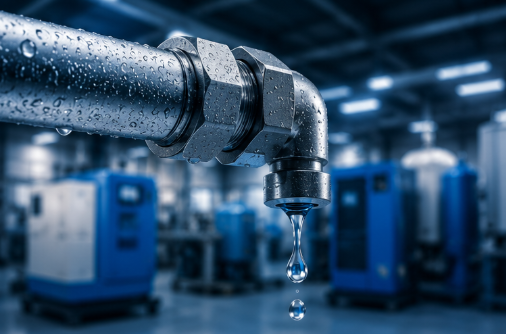
Why Does Compressed Air Contain Moisture?
Compressed air is widely used in modern industries such as CNC machining, laser cutting, semiconductor manufacturing, packaging automation and food processing. However, one common problem exists in almost every compressed air system: moisture.
Many users assume compressed air is naturally dry after compression, but in reality, compressed air systems continuously generate water during operation. If moisture is not properly removed, it can damage pneumatic equipment, reduce production stability and increase maintenance costs.
Understanding where moisture comes from is the first step toward improving compressed air quality.
Atmospheric Air Always Contains Water Vapor
The air around us naturally contains humidity in the form of water vapor. The amount of water vapor depends on:
- Ambient temperature
- Relative humidity
- Weather conditions
- Seasonal climate changes
When an air compressor draws in atmospheric air, it also draws in this moisture.
For example, under normal factory conditions, a compressor can introduce a significant amount of water into the compressed air system every day.
Although the water vapor is invisible at first, it becomes a serious problem after compression and cooling.
What Happens During Air Compression?
During compression, the air volume becomes smaller while the moisture concentration increases dramatically.
At the same time, compressed air temperature rises sharply. Hot compressed air can temporarily hold a large amount of water vapor.
However, once the compressed air begins cooling inside aftercoolers, pipelines or air tanks, the water vapor starts condensing into liquid water.
This process is very similar to water droplets forming on a cold surface during humid weather.
As compressed air travels through the piping system, more condensation forms continuously.
Why Condensation Forms Inside Pipelines
Even after central air treatment equipment removes part of the moisture, compressed air pipelines still create additional condensation.
This happens because:
- Long pipelines cool compressed air naturally
- Ambient temperatures fluctuate
- Pressure changes affect moisture saturation
- Pipe surfaces accelerate condensation
As a result, liquid water often appears near the end of the compressed air system — especially close to equipment inlets.
This phenomenon is commonly known as secondary condensation.
For factories with long-distance piping systems, moisture problems near terminal equipment are extremely common.
Why Moisture Becomes a Serious Industrial Problem
Water inside compressed air systems can create many operational problems.
Common issues include:
- Rust inside pneumatic pipelines
- Corrosion of machine components
- Solenoid valve malfunction
- Cylinder sticking
- Damage to linear encoders
- Reduced machining accuracy
- Unstable pneumatic control
Industries such as laser cutting, semiconductor manufacturing and electronics production are particularly sensitive to moisture contamination.
Even small amounts of condensate may lead to production downtime and product quality issues.
Why Traditional Air Treatment Is Sometimes Not Enough
Many factories already install:
- Refrigerated air dryers
- Main pipeline filters
- Air receivers
- FRL units
These systems help remove moisture centrally. However, they cannot completely eliminate secondary condensation generated inside long piping systems.
This is why some equipment still experiences moisture problems even when central air dryers are operating normally.
For critical applications, additional terminal air treatment is often required near the equipment inlet.
Conclusion
Moisture naturally exists in every compressed air system because atmospheric air always contains water vapor. During compression and cooling, this moisture condenses into liquid water inside pipelines and pneumatic equipment.
Understanding how condensation forms helps manufacturers improve compressed air quality and reduce equipment failures.
In the next article, we will discuss the most common problems caused by wet compressed air and how moisture affects industrial pneumatic systems.