
Mar 7, 2026Compressed Air Problems
Most Common Compressed Air Drying Technologies: Advantages and Disadvantages
A practical guide to common compressed air drying technologies and their industrial applications.
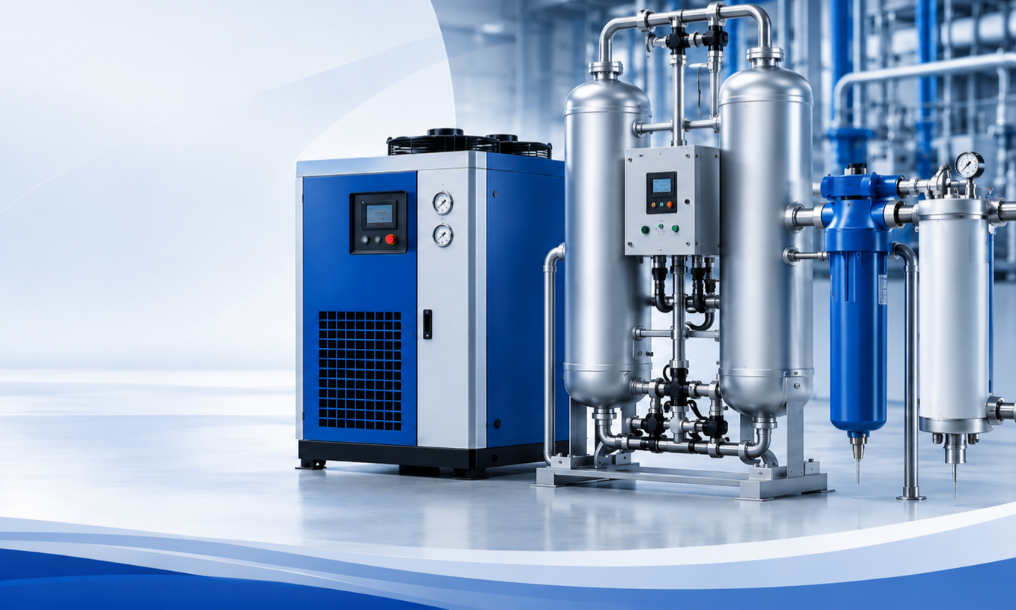
Introduction to Compressed Air Drying
Compressed air generated by air compressors contains a large amount of moisture, water vapor and oil mist. If not properly treated, these contaminants can damage pneumatic equipment, reduce system stability and shorten equipment service life.
Compressed air drying is an essential process used to remove moisture and oil from compressed air systems in order to achieve cleaner, drier and more reliable industrial air performance.
The basic principle of compressed air drying is to condense, absorb or separate moisture from compressed air through refrigeration, adsorption or membrane technology.
Types of Compressed Air Drying Technologies and Applications
1. Refrigerated Air Drying Technology
Refrigerated air dryers cool compressed air using refrigerant systems, causing water vapor and oil mist to condense into liquid form for removal.
This technology is widely used in industries such as:
- Pharmaceutical manufacturing
- Electronics
- Precision machinery
- Automotive production
- General industrial applications
Advantages
- Stable drying performance
- Simple operation
- Cost-effective solution
- Suitable for most industrial environments
Disadvantages
- Higher energy consumption compared to some alternatives
- Requires regular maintenance and cleaning
2. Desiccant Air Drying Technology
Desiccant air dryers use adsorption materials to remove moisture and oil vapor from compressed air.
This technology is commonly applied in industries with extremely high air quality requirements, including:
- Petrochemical industry
- Metallurgy
- Aerospace
- Food processing
- Beverage production
Advantages
- Achieves extremely low dew points
- Ideal for high-precision applications
- Excellent drying performance in demanding environments
Disadvantages
- Higher initial investment cost
- Higher maintenance expenses
- Desiccant materials require periodic replacement
3. Membrane Air Drying Technology
Membrane air dryers remove moisture through selective membrane separation technology. Water vapor passes through the membrane due to pressure differences, achieving the drying effect.
This technology is widely used in:
- Food industry
- Medical applications
- Laboratory systems
- Small pneumatic systems
Advantages
- Compact structure
- Low maintenance requirements
- No moving parts
Disadvantages
- Limited capacity for large airflow applications
- Less suitable for extremely humid environments
Conclusion
Different compressed air drying technologies have their own advantages and limitations. Selecting the right drying solution depends on the actual working environment, air quality requirements and industrial application.
Modern compressed air treatment systems combine different drying and filtration technologies to provide stable, clean and reliable compressed air for industrial production.