
Why Does Your Compressed Air System Need an Automatic Condensate Drain?
Learn why automatic condensate drain valves are essential for compressed air systems. Compare timer, zero-air-loss, level-controlled, and mechanical drains from ENHUI TECH.
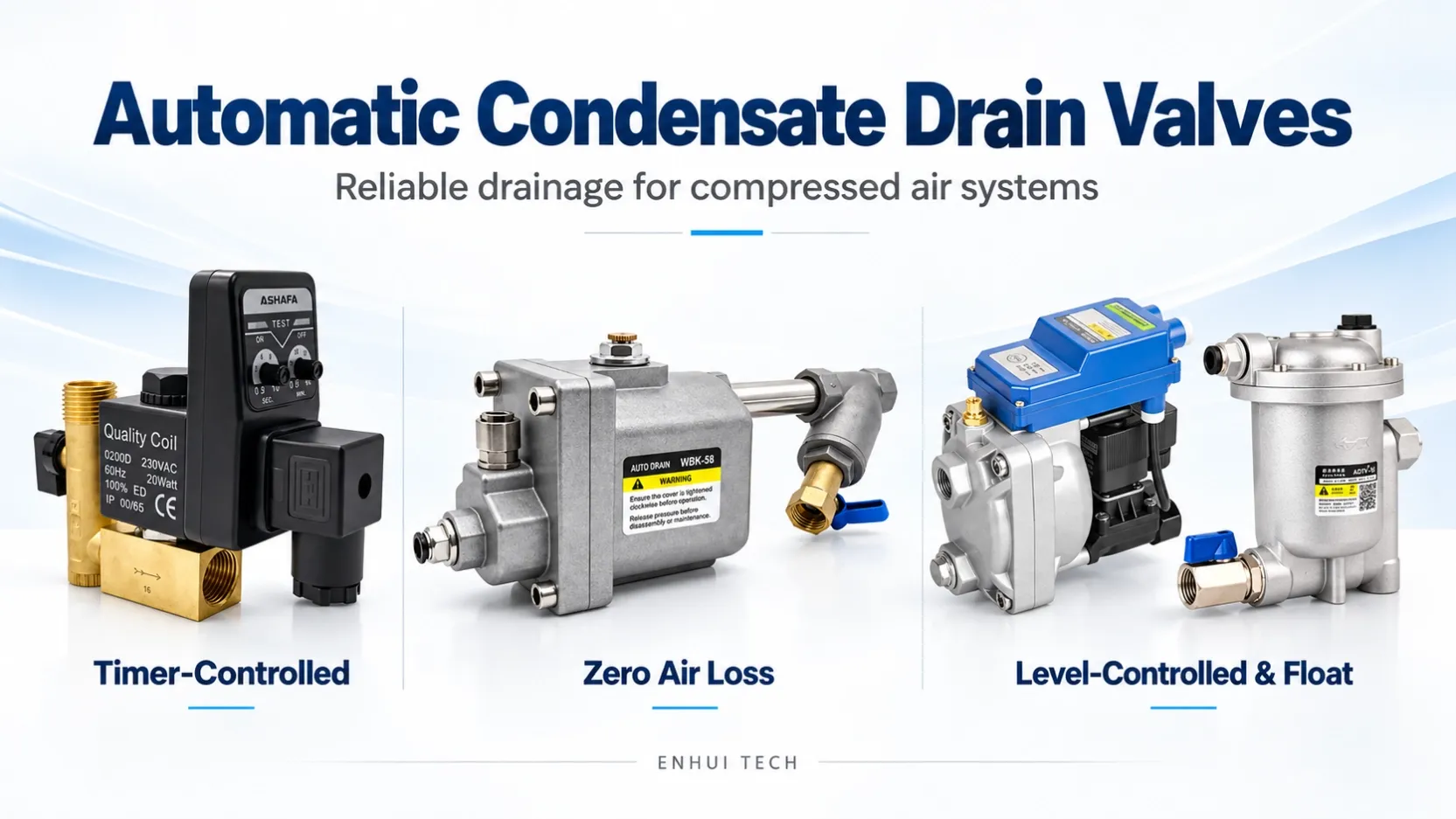
Compressed air systems generate condensate during compression and cooling. Water can accumulate in air receivers, dryers, filters, and pipelines.
Without effective drainage, condensate may cause corrosion, damage pneumatic components, affect painting quality, and increase maintenance costs.
An automatic condensate drain valve removes accumulated water without relying on manual draining, helping keep your compressed air system running reliably.
What Problems Can Condensate Cause?
Excess moisture in compressed air systems can lead to several problems:
- Equipment corrosion: Water can corrode air receivers, pipes, and metal components.
- Pneumatic component failure: Moisture may cause valves and cylinders to stick or malfunction.
- Poor product quality: Water contamination can affect painting and other moisture-sensitive processes.
- Higher maintenance costs: Manual draining and moisture-related failures increase maintenance workload and downtime.
Installing suitable automatic drains at condensate collection points helps reduce these risks.
How Does an Automatic Condensate Drain Work?
Different drain valves use different mechanisms to remove accumulated liquid.
1. Electronic Timer Drain Valve
A timer-controlled drain opens at preset intervals. The discharge duration and interval can be adjusted to suit operating conditions.
The ENHUI Split-Type Electronic Timer Drain Valve features adjustable timing controls, a manual test button, and a modular design for convenient installation and servicing.
Best for: Applications requiring scheduled automatic drainage at an economical initial cost.
2. Zero Air Loss Automatic Drain Valve
A level-operated zero-air-loss drain responds to accumulated liquid rather than a preset schedule, helping avoid unnecessary compressed air loss.
The ENHUI Zero Air Loss Automatic Drain Valve uses a mechanical control mechanism to discharge condensate when needed.
Best for: Applications where reducing compressed air waste and operating costs is a priority.
3. Electronic Level-Controlled and Mechanical Float Drains
Electronic level-controlled drains detect condensate accumulation and activate drainage when the liquid reaches the operating level. Mechanical float drains use a rising and falling float to open and close the valve without electricity.
The ENHUI Automatic Condensate Drain Valve Series offers electronic and mechanical options for different system requirements.
Best for: Applications requiring drainage based on actual condensate accumulation, with electronic and no-power options available.
Where Should Automatic Drain Valves Be Installed?
Automatic drains are commonly installed at:
- Air compressor aftercoolers and separators
- Air receiver tanks
- Refrigerated air dryers
- Compressed air filters
- Moisture separators
- Low points in compressed air pipelines
Correct installation and regular inspection help ensure reliable drainage. An automatic drain complements your air treatment equipment; it does not replace the need for a properly selected air dryer or separator.
Choose the Right Automatic Drain for Your Application
ENHUI TECH supplies automatic condensate drain valves for air compressors, dryers, filters, and industrial pneumatic systems.
Whether you need a timer-controlled, zero-air-loss, or mechanical drain, we can help you select a suitable model based on your working pressure, connection size, and installation requirements.
Explore ENHUI TECH Automatic Drain Valves or contact us for a product recommendation and quotation.