
Sep 10, 2026Compressed Air Basics
Zero-Loss Drain vs Timer Drain: Which Is Better for a Compressed Air System?
Compare zero-loss, timer, float and manual condensate drains. Learn their air loss, reliability, maintenance and best applications.
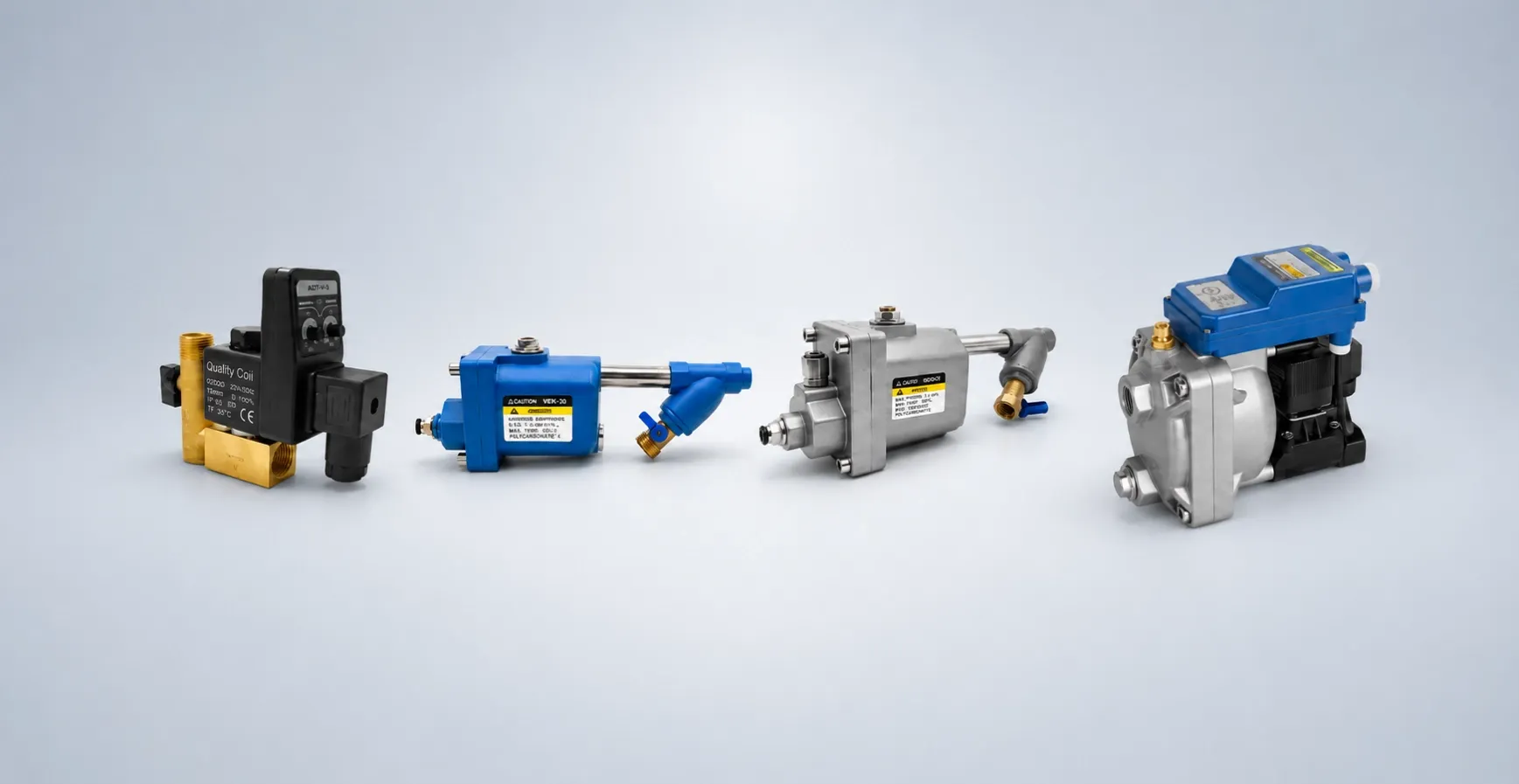
Condensate is unavoidable in most compressed air systems.
As compressed air cools inside receivers, dryers, filters and pipelines, water vapor can condense into liquid. This liquid may also contain oil, rust and other contaminants.
If condensate is not removed reliably, it can cause:
- Corrosion inside receivers and pipelines
- Blocked filters and drain valves
- Water reaching pneumatic equipment
- Unstable cylinders and control valves
- Increased maintenance and unexpected downtime
- Contamination at CNC machines, spray equipment and production lines
Several types of condensate drains are available. The right choice depends on the amount and condition of the condensate, operating pressure, installation point and maintenance environment.
1. Manual Drain Valves
A manual drain is the simplest method. An operator opens the valve periodically to discharge accumulated condensate.
Advantages
- Simple construction
- Low initial cost
- No electricity required
Limitations
- Depends entirely on operator action
- Drain intervals may not match actual condensate production
- Condensate can remain in the system between inspections
- Leaving the valve partly open wastes compressed air
Manual draining may be acceptable for small systems that are checked frequently. It is usually less suitable for continuously operating industrial systems.
2. Timer-Controlled Solenoid Drains
A timer drain opens at preset intervals. Both the interval and opening duration can normally be adjusted.
For example, the valve may open for several seconds every few minutes.
Advantages
- Automatic operation
- Simple installation
- Relatively low purchase cost
- Suitable for predictable condensate loads
Limitations
A timer cannot detect how much condensate is actually present.
If the valve opens when little or no condensate has accumulated, compressed air is discharged unnecessarily. If the interval is too long, water may remain inside the receiver, filter or pipeline.
Small valve passages may also become blocked by rust, oil sludge or solid particles.
Timer drains therefore require correct adjustment and regular inspection.
3. Mechanical Float Drains
A float drain uses the rising condensate level to open a discharge valve. It normally requires no electrical connection.
Advantages
- Responds to the condensate level
- No external power supply
- Can reduce unnecessary air discharge
- Suitable for filters and separators with relatively clean condensate
Limitations
The float and internal mechanism remain in contact with the condensate. Oil, rust and dirt can restrict their movement or block a small outlet.
Common float-drain problems include:
- Float mechanism sticking
- Drain outlet blockage
- Continuous air leakage
- Condensate remaining inside the bowl
- Internal component corrosion or wear
Accessibility is important because the drain may need cleaning or replacement.
4. Electronic Zero-Loss Drains
An electronic zero-loss drain uses a level sensor to monitor the condensate. The discharge valve opens only after the liquid reaches a defined level and closes before excessive compressed air escapes.
Advantages
- Drain operation follows the actual liquid level
- Reduced unnecessary compressed air loss
- Suitable for changing condensate loads
- Some models provide alarm or remote monitoring signals
- Commonly used on receivers, dryers, filters and separators
Limitations
- Higher initial cost than a basic timer drain
- Requires a suitable power supply
- Sensors and pilot passages can still be affected by heavy contamination
- Correct sizing and installation remain necessary
- Maintenance access must be considered
“Zero-loss” does not mean the drain can never fail. Oil sludge, rust, incorrect installation and inadequate maintenance can affect any drain design.
Comparison of Common Compressed Air Drains
Drain type | Power required | Air-loss control | Contaminated condensate | Maintenance dependence |
Manual drain | No | Depends on operator | Moderate | High |
Timer drain | Usually yes | Limited | Depends on valve opening | Moderate |
Float drain | No | Generally good | Can be sensitive to dirt | Moderate |
Electronic zero-loss drain | Yes | Very good when operating correctly | Model-dependent | Low to moderate |
Large-orifice automatic drain | Model-dependent | Design-dependent | Suitable for heavier condensate when correctly selected | Low to moderate |
here is no single drain type that is best for every installation.
How to Choose the Right Condensate Drain
Before selecting a drain, confirm the following information.
Installation point
A receiver tank, refrigerated dryer, coalescing filter and point-of-use separator may produce different quantities and types of condensate.
Operating pressure
The drain’s pressure rating must cover the system’s maximum operating pressure—not only its normal reading.
Condensate volume
Large compressors and humid environments can generate substantial amounts of water. A drain that is too small may not discharge it quickly enough.
Condensate condition
Clean water is easier to discharge than a mixture containing oil, rust, scale and sludge. Contaminated condensate generally requires a larger, less restrictive flow path.
Connection size
Check the inlet and outlet connection sizes. Undersized fittings or long discharge tubes can restrict flow.
Power and controls
For electronic and timer drains, confirm the available voltage, frequency and electrical protection requirements.
Maintenance access
The drain should be installed where operators can inspect, test and clean it safely.
Protecting Equipment at the Point of Use
A reliable condensate drain removes collected liquid from receivers, dryers, filters and separators. However, drainage alone cannot guarantee that no liquid water will reach the end equipment.
Compressed air can cool again while traveling through long pipelines, producing additional condensate downstream.
For sensitive equipment such as CNC machines, pneumatic control systems and automated production lines, a point-of-use precision air separator can provide additional protection by removing entrained liquid water, oil droplets and particles near the machine inlet.
A precision air separator removes liquid contamination. It does not replace a compressed air dryer that controls water vapor and pressure dew point.
ENHUI TECH supplies automatic condensate drain valves and point-of-use compressed air treatment solutions for receivers, filters, dryers, CNC machines and industrial equipment.