
Sep 1, 2026Compressed Air Basics
Evolution of Compressed Air Condensate Drains: 5 Types Compared
Compare manual, timer, float, pneumatic pulse and electronic level drains to select the right condensate drain for your compressed air system.
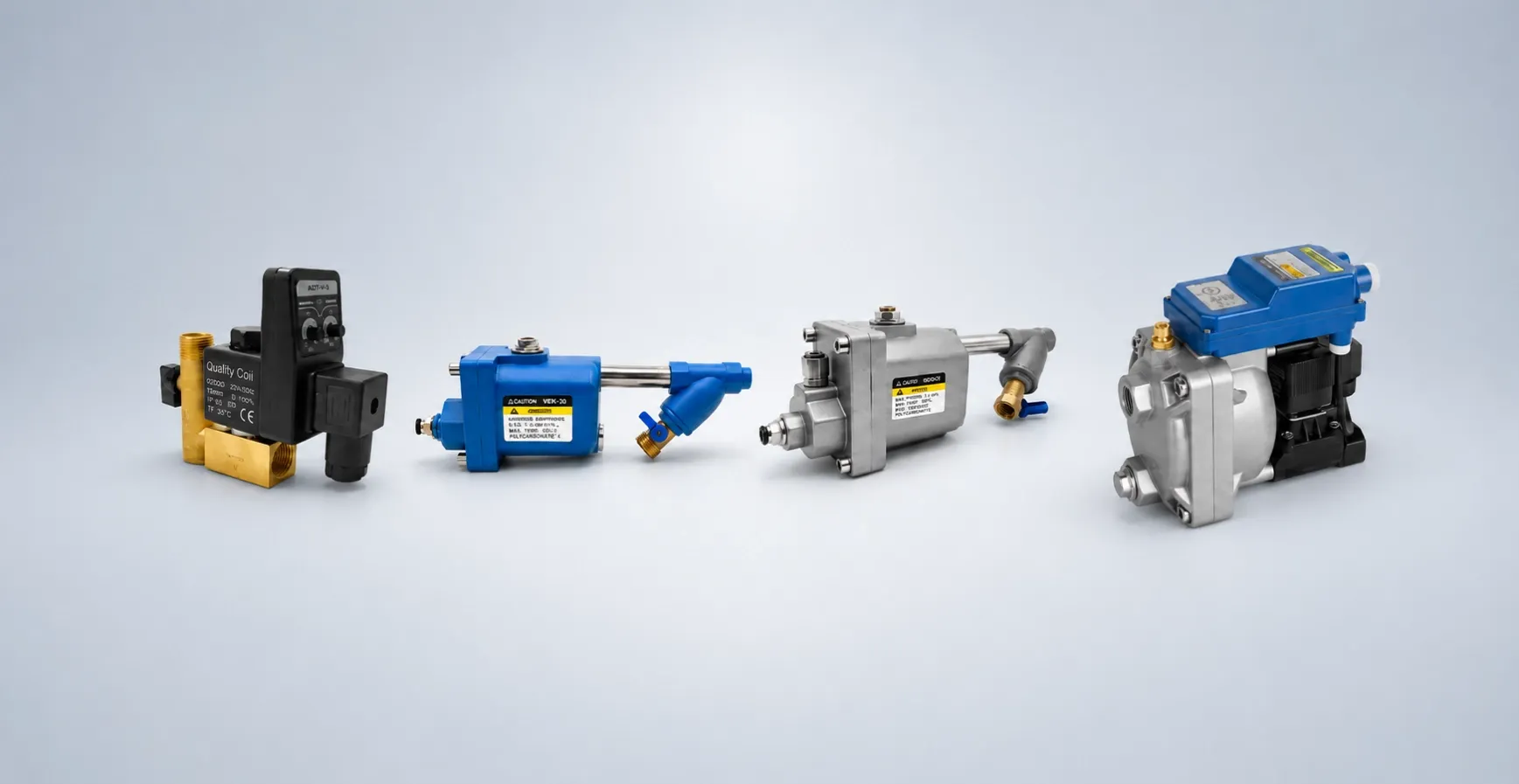
Compressed air systems continuously produce condensate. This liquid may contain water, compressor oil, rust, dust and other solid contaminants.
If condensate is not discharged reliably, it can cause:
- Corrosion in receivers and pipelines
- Higher loads on filters and dryers
- Sticking pneumatic valves and cylinders
- Liquid water at the point of use
- Product-quality problems
- Increased maintenance and downtime
Condensate drainage has therefore evolved from manual operation to automatic, demand-based control. This article compares five common drainage methods and explains where each one works best.
This is a practical technology-development overview, not a strict patent timeline.
1. Manual Drain Valves
Manual draining is the simplest method. An operator opens a valve at the bottom of an air receiver, filter or pipeline low point to discharge accumulated condensate.
Advantages
- Low initial cost
- Simple construction
- No electrical supply
- Easy to understand
Limitations
Condensate production changes with:
- Ambient temperature
- Relative humidity
- Compressor load
- Operating hours
- Seasonal conditions
A fixed manual draining schedule may therefore be insufficient during humid or high-load periods.
Opening the valve for too long wastes compressed air. Leaving it slightly open to prevent water accumulation creates continuous air loss.
Manual drains also depend on operators remembering to check every drain point. They are best suited to small systems, backup drain points or temporary use during maintenance.
2. Electronic Timer Drains
Electronic timer drains were developed to reduce dependence on manual operation.
The user normally sets two parameters:
- The interval between drain cycles
- How long the valve remains open
When the preset interval is reached, the solenoid valve opens and discharges condensate.
Advantages
- Affordable
- Compact
- Easy to install
- Adjustable drain cycle
- Suitable for common drain points
Electronic timer drains are widely used on:
- Air receiver tanks
- Refrigerated dryers
- Compressed air filters
- Moisture separators
- Pipeline low points
Limitations
A timer drain operates according to time, not the actual condensate level.
If the valve opens for too short a period, some condensate may remain. If it stays open too long, compressed air escapes after the liquid has been discharged.
A setting that works during a dry season may waste air during low-condensate periods or become insufficient during humid weather.
Small valve passages may also become blocked by rust, oil sludge or solid particles. The valve and upstream strainer should therefore be inspected regularly.
3. Mechanical Float Drains
Mechanical float drains introduced demand-based drainage without electronic control.
As condensate enters the drain body, the float rises. At a defined level, the float mechanism opens the outlet. When the liquid level falls, the valve closes.
Advantages
- Drains according to the liquid level
- Usually requires no electricity
- Does not open on a fixed timer
- Simple operating principle
Limitations
The available float force is limited. Some designs therefore use relatively small valve openings to maintain a reliable seal.
Small passages can be affected by:
- Rust particles
- Oil sludge
- Pipe scale
- Other solid contaminants
The float, lever and valve mechanism remain in contact with contaminated condensate. Over time, these moving parts may corrode, wear or stick.
Float-drain performance depends heavily on the internal design, outlet size, condensate condition and maintenance frequency.
4. Pneumatic Pulse Drain Valves
Pneumatic pulse drains were developed for applications requiring reliable discharge without electrical wiring.
These drains use compressed air pressure to create a fast discharge action. Many designs include a large flow passage, a self-cleaning plunger or internal screens to reduce blockage from dirty condensate.
Advantages
- No electrical wiring
- Large discharge passage
- Good tolerance of oil sludge and particles
- Fast discharge action
- Suitable for demanding industrial environments
- Easy-to-service designs are available
They are often considered for:
- Air receiver tanks
- Refrigerated dryers
- Moisture separators
- Filters with heavy condensate loads
- Locations where electrical wiring is inconvenient
Limitations
Pneumatic pulse drains vary significantly in design. Their trigger method, discharge capacity and compressed air consumption should be checked for the specific model.
“No electricity required” does not automatically mean “zero air loss” or “maintenance-free.”
Large particles can still block the inlet, and internal screens require periodic inspection.
5. Electronic Level-Controlled Zero-Loss Drains
Electronic level-controlled drains use a sensor to monitor the actual condensate level.
A typical design includes:
- A condensate collection chamber
- A capacitive level sensor
- An electronic controller
- A pilot valve
- A diaphragm or main discharge valve
When the condensate reaches the upper level, the controller opens the drain valve. When the liquid falls to the lower level, the valve closes before a significant amount of compressed air escapes.
Operating Process
- Condensate enters the collection chamber.
- The liquid level rises.
- The sensor detects the upper level.
- The controller opens the pilot or diaphragm valve.
- System pressure forces the condensate out.
- The valve closes when the lower level is reached.
Some models also provide:
- Manual test functions
- Blockage alarms
- Fault signals
- Remote monitoring outputs
Advantages
- Drains according to the actual liquid level
- Minimizes unnecessary compressed air loss
- Automatically adapts to changing condensate loads
- Suitable for continuously operating systems
- Alarm and remote-monitoring options are available
Limitations
- Higher initial cost
- Requires electrical power
- Sensors and valves still require inspection
- Heavy sludge or particles may affect performance
- Electronic faults require appropriate service support
Comparison of Compressed Air Condensate Drains
Drain type | Control method | Power required | Potential air loss | Main advantage | Main limitation |
|---|---|---|---|---|---|
Manual drain | Operator opens the valve | No | Depends on operation | Simple and inexpensive | Easy to miss drain cycles |
Electronic timer drain | Fixed time intervals | Yes | Moderate if over‑adjusted | Affordable and adjustable | Does not detect liquid level |
Mechanical float drain | Float‑operated valve | Usually no | Low | Demand‑based mechanical drainage | Moving parts may stick |
Pneumatic pulse drain | Pressure‑powered discharge | Usually no electricity | Depends on design | Large passage and good contamination tolerance | Performance varies by design |
Electronic level drain | Sensor‑based liquid‑level control | Yes | Low | Demand‑based drainage with optional alarms | Higher cost and more complex control |
How to Select the Right Condensate Drain
The most advanced drain is not automatically the best choice for every location. Consider the following factors before selecting a model.
Condensate Volume
A receiver tank or moisture separator may produce much more condensate than an individual compressed air filter.
Check the drain’s capacity at the actual working pressure. Do not select a drain based only on its thread size.
Contamination Level
Condensate may contain oil sludge, rust and solid particles.
For dirty condensate, consider a drain with:
- A large internal passage
- A self-cleaning valve
- Accessible screens
- Easy disassembly
- Suitable contamination tolerance
Operating Hours
A timer drain may be sufficient for a small workshop operating only a few hours per day.
A continuously operating compressor station may benefit more from a level-controlled drain that reduces unnecessary compressed air loss.
Working Pressure
Confirm both the minimum and maximum operating pressure. Some drain mechanisms require a minimum pressure difference to operate correctly.
Power Supply
For electronic drains, verify:
- Voltage
- Frequency
- Plug or cable type
- Environmental protection requirements
Mechanical or pneumatic drains may be more suitable where electrical wiring is unavailable.
Installation Position
The drain should be installed where condensate can flow into it freely. Avoid narrow, upward-sloping or easily blocked inlet connections.
The unit should remain accessible for inspection, testing and cleaning.
Maintenance Capability
Automatic does not mean maintenance-free.
Every drain should be checked regularly for:
- Inlet blockage
- Valve leakage
- Incomplete discharge
- Damaged wiring
- Incorrect timer settings
- Alarm conditions
- Continuous compressed air loss
Where Are Automatic Drains Installed?
A compressed air system normally requires several drain points.
Common locations include:
- Compressor aftercoolers
- Centrifugal moisture separators
- Air receiver tanks
- Refrigerated air dryers
- Compressed air filters
- Pipeline low points
- Point-of-use liquid separators
The condensate volume and contamination level may differ at each location. One drain type may not be suitable for every drain point in the system.
Conclusion
The development of compressed air condensate drains has focused on three goals:
- Removing variable condensate loads on time
- Reducing compressed air loss
- Improving reliability with dirty or oily condensate
Manual drains are simple but depend on operators. Timer drains are economical but cannot detect the actual liquid level. Float drains work without electricity but may be affected by contaminated condensate. Pneumatic pulse drains offer large discharge passages and installation flexibility. Electronic level-controlled drains provide demand-based drainage and can minimize compressed air loss.
The correct solution is not necessarily one drain type for the entire system. Each drain point should be evaluated according to its pressure, condensate load, contamination and operating conditions.
Need Help Selecting an Automatic Condensate Drain?
ENHUI TECH supplies:
- Electronic timer drain valves
- Pneumatic automatic drain valves
- Zero-air-loss condensate drains
- Drain solutions for receivers, dryers, filters and liquid separators