
Sep 1, 2026Compressed Air Problems
Compressed Air Purification for Spray Painting: How to Control Water, Oil and Particles
Learn how to remove water, oil and particles from spray-painting compressed air using dryers, filters, drains and point-of-use separators.
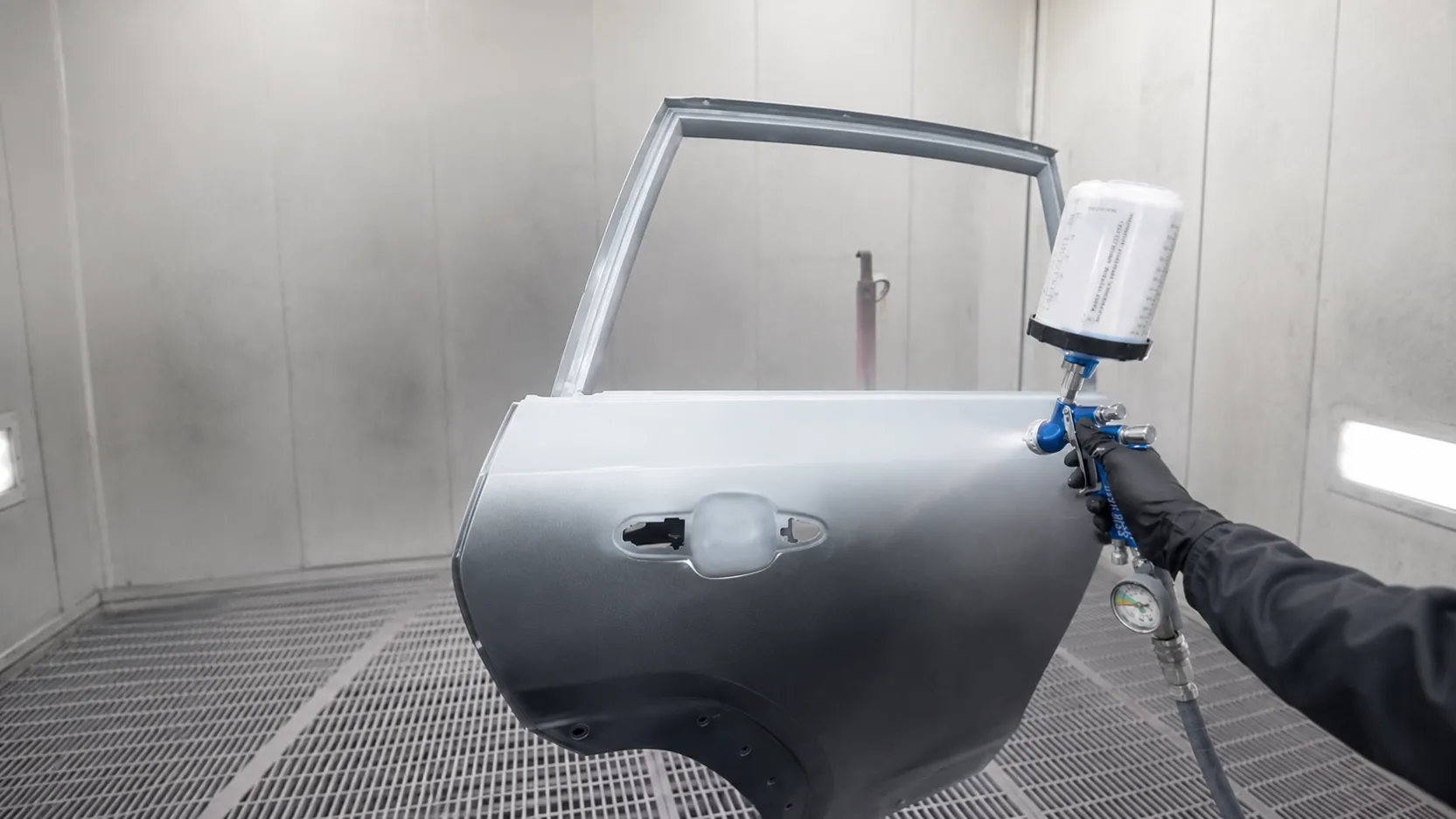
Compressed air is directly involved in many spray-painting processes. It may be used to atomize coatings, operate spray guns, clean surfaces and power pneumatic equipment.
Contaminated compressed air can therefore affect more than equipment reliability. Liquid water, oil and particles may also contribute to coating defects, rework and unstable production.
A reliable paint-shop air system must control three main contaminants:
- Water
- Oil
- Solid particles
This requires more than installing a small filter next to the spray gun. Effective purification starts in the compressor room and continues through the distribution pipe to the final point of use.
Where Is Compressed Air Used in a Paint Shop?
Typical compressed air applications include:
- Spray-gun atomization
- Paint and coating transfer
- Mixing and pressure pots
- Surface blow-off
- Water removal after washing
- Pneumatic sanding and polishing tools
- Sealant and adhesive application
- Pneumatic valves and cylinders
- Automated spray equipment
These applications do not always require exactly the same air quality.
Air that directly contacts the coating or painted surface normally requires stricter contamination control than air used only to operate a pneumatic cylinder.
Which Contaminants Are Found in Compressed Air?
1. Water Vapor
Ambient air always contains water vapor. The compressor draws in this moisture and increases its concentration.
A compressed air dryer is required to reduce water vapor and control the pressure dew point.
Normal filters and mechanical separators cannot remove water vapor effectively.
2. Liquid Water
When compressed air cools below its pressure dew point, part of the water vapor condenses into liquid water.
Liquid may collect in:
- Aftercooler separators
- Receiver tanks
- Refrigerated dryers
- Filters
- Pipeline low points
- Flexible hoses
- Branch pipes near the paint booth
Liquid separators and automatic drains are used to remove this condensate.
3. Compressor Oil
Oil-injected compressors may introduce oil aerosols and oil vapor into the compressed air.
Coalescing filters can reduce liquid oil aerosols. Activated-carbon or other oil-vapor treatment may be required where stricter oil control is specified.
A standard particulate filter cannot remove every form of oil contamination.
4. Solid Particles
Particles may come from:
- Compressor intake air
- Pipe corrosion
- Filter material
- Desiccant dust
- Old hoses
- Installation debris
- Pneumatic tools and fittings
Particles can block spray-gun passages or become part of the coating contamination risk.
How Contaminated Air May Affect Painting
Compressed air contamination is not the only cause of coating defects. Coating formulation, surface preparation, booth conditions, spray settings and curing also matter.
However, contaminated air may contribute to:
- Fisheyes or craters
- Blushing or cloudiness
- Bubbles and pinholes
- Poor adhesion
- Uneven atomization
- Visible particles in the finish
- Color or gloss inconsistency
- Frequent spray-gun cleaning
- Unexpected filter blockage
Oil and silicone contamination are common concerns when investigating fisheyes. Water-related defects depend on the coating chemistry and process conditions.
The compressed air supply should therefore be tested as part of a complete root-cause investigation.
Recommended Compressed Air Treatment Process
A typical paint-shop compressed air system may follow this sequence:
Compressor → Aftercooler → Bulk Liquid Separator → Air Receiver → Pre-Filter → Air Dryer → Coalescing Filters → Distribution Pipe → Point-of-Use Separator → Spray Gun
The exact arrangement depends on the compressor type, required air quality, climate and coating process.
Stage 1: Aftercooling and Bulk Water Separation
Compressed air leaves the compressor at an elevated temperature. An aftercooler reduces its temperature so that a large portion of the water vapor can condense.
A centrifugal or mechanical liquid separator then removes the bulk liquid from the airflow.
The separator must have a reliable drain. Removing liquid from the airflow is not enough if the collected condensate remains trapped inside the housing.
Stage 2: Receiver Tank and Automatic Drain
The receiver tank stabilizes pressure and allows additional cooling and condensate collection.
A suitable automatic drain should be installed at the bottom of the receiver. Options include:
- Electronic timer drains
- Mechanical drains
- Pneumatic automatic drains
- Electronic level-controlled zero-loss drains
A timer drain must be adjusted carefully. If it opens for too short a period, liquid may remain. If it opens for too long, compressed air is wasted.
Drain performance should be confirmed by observing the actual discharge, not only by checking the controller light.
Stage 3: Compressed Air Dryer
The dryer reduces water vapor and controls the pressure dew point.
Refrigerated dryer
A refrigerated dryer is commonly used for general industrial compressed air. It may be suitable where all downstream pipes remain warmer than the delivered pressure dew point.
Desiccant dryer
A desiccant dryer can provide a lower pressure dew point. It may be required when:
- The pipeline is exposed to low temperatures
- The coating process requires drier air
- Condensation must be prevented in cold downstream pipes
- The paint equipment manufacturer specifies a low dew point
The dryer should be selected according to actual inlet temperature, airflow, working pressure and ambient conditions.
Stage 4: Filtration
Filters should be installed in stages rather than relying on one very fine element.
Pre-filter
Removes larger particles and bulk liquid to protect downstream equipment.
Coalescing filter
Reduces fine liquid aerosols and small particles.
After-filter
Captures particles that may come from a desiccant dryer or downstream pipe.
Activated-carbon filter
Used where oil-vapor reduction is required. Activated carbon has a finite service life and must be replaced according to operating conditions and the manufacturer’s instructions.
Filters do not reduce water vapor. A dryer is still required for pressure-dew-point control.
Stage 5: Distribution Pipe Design
Correct piping helps prevent collected liquid from reaching the paint booth.
Recommended practices include:
- Use a properly sized main pipe
- Provide a suitable pipe slope
- Install drains at low points
- Take branch lines from the top of the main pipe
- Avoid unnecessary dead legs
- Minimize restrictive fittings
- Use hoses compatible with the painting process
- Replace leaking couplings and damaged hoses
Undersized pipes, long hoses and clogged filters also cause pressure drop. This can affect spray-gun atomization even when the compressor-room pressure appears normal.
Stage 6: Point-of-Use Protection
Even after central drying and filtration, liquid can form or collect in long distribution pipes.
A point-of-use liquid separator installed close to the paint booth provides final protection against:
- Liquid water
- Oil droplets
- Solid particles
It should be installed after the main dryer and filters, as close to the spray gun or spray equipment as practical.
A point-of-use separator does not remove water vapor and cannot replace a dryer when low pressure dew point is required.
Why Final Protection Matters
The compressor room may be hundreds of meters away from the spray booth. Between these two locations, compressed air may experience:
- Temperature changes
- Pressure loss
- Pipe corrosion
- Failed low-point drains
- Contaminated hoses
- Liquid accumulation
Testing only in the compressor room may therefore fail to identify the condition of the air reaching the spray gun.
Selecting a Point-of-Use Separator for Painting
Before selecting a separator, confirm:
- Number of spray guns
- Maximum simultaneous airflow
- Working pressure
- Pipe or hose size
- Inlet and outlet connection
- Available installation space
- Type of liquid contamination
- Required drain method
For multiple spray guns, use the total peak airflow rather than the average consumption of one gun.
Need Help Purifying Compressed Air for Spray Painting?
ENHUI TECH supplies end-of-line precision air separators, automatic condensate drains, receiver tanks, pneumatic tubing and fittings for spray-painting air systems.
Our point-of-use separator operates without electricity or replaceable filter elements. It is designed to remove liquid water, oil droplets and particles immediately before the compressed air enters the spray equipment.