
Sep 1, 2026Compressed Air Problems
Paint Booth Humidity vs. Moisture in Compressed Air: What Is Affecting Your Painting Quality?
Learn the difference between paint booth humidity, water vapor and liquid condensate in compressed air—and how to protect spray equipment.
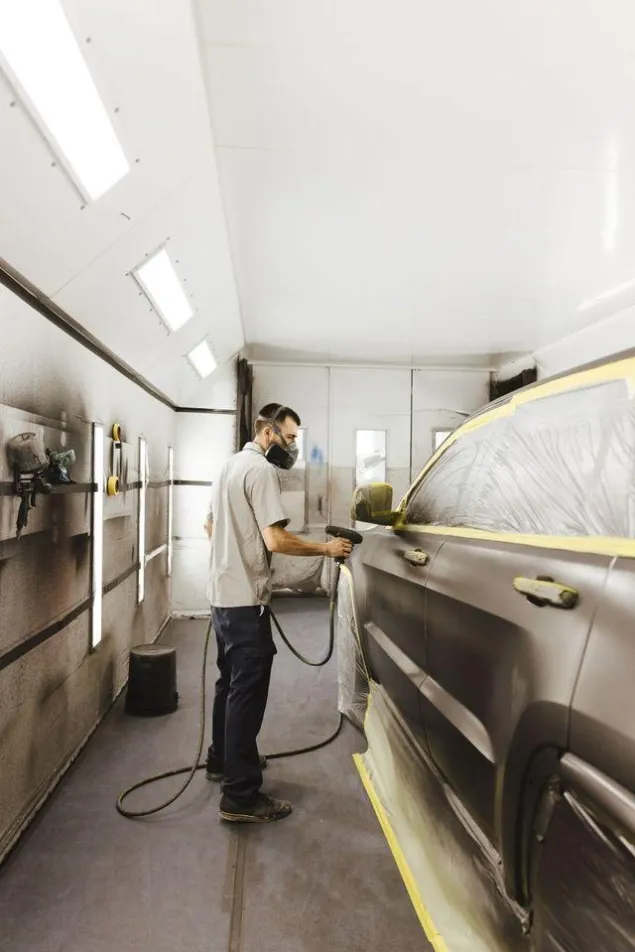
When water appears near a spray gun or coating defects begin to increase, paint booth humidity is often blamed first.
However, moisture problems in painting operations can come from two separate sources:
- The temperature and relative humidity of the paint booth environment
- Water vapor or liquid condensate carried by the compressed air supplied to the spray gun
These conditions are related, but they are not the same problem. They also require different measurement methods and air-treatment solutions.
A well-controlled paint booth cannot compensate for contaminated compressed air at the spray gun. Likewise, installing a point-of-use liquid separator cannot control the humidity of the paint booth or remove all water vapor from compressed air.
Understanding this difference is the first step toward reducing painting defects, troubleshooting time and unnecessary equipment replacement.
Why Paint Booth Humidity Matters
Paint booth humidity refers to the amount of moisture in the surrounding booth air.
Temperature and relative humidity can influence coating application, flash-off, leveling, drying and curing. The appropriate operating range depends on the coating material, application method and paint manufacturer’s specifications.
Unstable booth conditions may contribute to problems such as:
- Inconsistent drying or flash-off time
- Poor coating flow and leveling
- Orange peel or uneven surface appearance
- Changes in color consistency
- Adhesion or curing problems
- Increased rework during seasonal humidity changes
For this reason, paint shops commonly monitor booth temperature, relative humidity, ventilation and air balance.
Stable relative humidity can support more consistent coating performance, but it does not confirm that the compressed air entering the spray gun is clean and dry.
Why Compressed Air Can Still Contain Moisture
Atmospheric air naturally contains water vapor. When air is compressed, cooled and transported through the factory piping system, part of this moisture may condense into liquid water.
A central refrigerated or desiccant dryer removes water vapor according to its operating capability and specified pressure dew point. However, liquid water can still appear downstream because of:
- Long compressed-air pipelines
- Temperature changes between the compressor room and production area
- Insufficient dryer capacity
- Dryer malfunction or unstable operating conditions
- Blocked or failed condensate drains
- Low points in the piping system
- Corroded or contaminated distribution pipes
- Cooling near the final point of use
- Poorly maintained filters and separators
This is why compressed air may appear dry near the compressor room but still carry liquid condensate when it reaches the spray gun.
Water Vapor and Liquid Water Are Different
One of the most important distinctions in compressed-air treatment is the difference between water vapor and liquid water.
Water vapor
Water vapor remains in a gaseous state and cannot normally be removed by a mechanical liquid separator.
It must be controlled by reducing the pressure dew point, typically using:
- Refrigerated air dryers
- Desiccant air dryers
- Membrane dryers
- Proper dryer monitoring and maintenance
Pressure dew point indicates the temperature at which water vapor begins to condense under system pressure.
Liquid water
Liquid water has already condensed into droplets inside the compressed-air system.
It can be collected and removed using:
- Moisture separators
- Automatic condensate drains
- Drip legs and properly designed piping
- Coalescing filtration where appropriate
- Point-of-use compressed air liquid separators
A point-of-use separator is therefore a final protection device for liquid contamination. It does not replace equipment designed to lower the water-vapor content of compressed air.
How Compressed-Air Contamination Can Reach the Spray Gun
Spray painting requires compressed air to atomize the coating into a controlled spray pattern. If liquid water, oil droplets, rust or other particles reach the spray gun, they may contaminate the process.
Possible consequences include:
- Unstable spray patterns
- Surface contamination
- Fisheyes, craters or uneven finishes
- Additional sanding and repainting
- Spray-gun blockage or maintenance
- Difficulty identifying the true cause of defects
- Disputes between the paint booth, compressor and production teams
Not every coating defect is caused by compressed air. The paint material, surface preparation, spray technique, booth conditions and curing process must also be investigated.
However, checking compressed air directly before the spray gun can help determine whether contamination is entering from the air supply.
Where Should Compressed-Air Quality Be Checked?
Testing only in the compressor room may not reveal the condition of the air at the actual application point.
For a more useful assessment, inspect the system at several locations:
- Downstream of the central dryer
- At the main distribution line
- At the branch serving the paint shop
- Directly before the spray gun or painting equipment
Important parameters may include:
- Pressure dew point
- Liquid water carryover
- Oil vapor or oil aerosol
- Particle concentration
- Working pressure during spraying
- Pressure drop across filters and treatment components
- Drain operation
Compressed-air monitoring in automotive paint shops commonly includes dew point, oil and particle measurements at both the supply side and the demand side. This helps identify whether contamination originates in central treatment or develops further downstream.
A Layered Solution for Painting Applications
Reliable compressed-air treatment normally requires several stages rather than one device.
1. Control the paint booth environment
Monitor booth temperature, relative humidity, ventilation and airflow according to the coating supplier’s requirements.
2. Remove bulk condensate
Use aftercoolers, receivers, moisture separators and automatic drains to remove condensed water near the compressor.
3. Control water vapor
Select a refrigerated or desiccant dryer based on the required pressure dew point and local operating conditions.
4. Remove oil and fine contaminants
Install appropriate filters according to the required compressed-air quality level. Monitor pressure drop and replace filter elements as specified.
5. Add final protection at the point of use
A point-of-use compressed air liquid separator can capture residual liquid water, oil droplets and particles that travel through or form inside downstream piping.
Installing the separator close to the painting equipment reduces the distance between the final treatment stage and the spray gun.
Point-of-Use Protection Before the Spray Gun
The ENHUI Point-of-Use Compressed Air Liquid Separator is designed to provide final protection before compressed-air equipment.
Its key features include:
- Separation of liquid water, oil droplets and particulates
- No electricity required
- No replaceable filter element
- Low pressure loss
- Automatic condensate drainage
- Compact installation near the application
- Minimal routine maintenance
- Multiple flow capacities for different air demands
It can complement an existing dryer and filtration system, especially where residual liquid contamination forms in long or temperature-sensitive downstream pipelines.
The separator does not remove water vapor, control pressure dew point or regulate paint booth humidity. It should be selected as one part of a complete compressed-air treatment system.
Troubleshooting Checklist
If you are experiencing water at the spray gun or inconsistent painting results, check the following:
- Is the booth temperature and humidity within the coating specification?
- What is the pressure dew point at the point of use?
- Is the central dryer operating correctly?
- Are automatic condensate drains working?
- Does water collect in low sections of the pipeline?
- Are filters saturated, blocked or overdue for replacement?
- Is oil or particulate contamination present?
- Does the air pressure drop while the spray gun is operating?
- Is the final separator installed close enough to the application?
- Does the treatment equipment have enough flow capacity?
Avoid replacing components based only on assumptions. Measure both the booth environment and compressed-air quality before deciding which part of the system needs improvement.
Frequently Asked Questions
Can paint booth humidity cause water to come out of the spray gun?
Paint booth humidity alone does not directly place liquid water inside the compressed-air line. However, humid intake air and temperature changes can increase the amount of condensate formed in the compressed-air system.
Can a water separator replace an air dryer?
No. An air dryer controls water vapor and pressure dew point. A liquid separator removes water that has already condensed into droplets. The two devices perform different functions and can be used together.
Why is there still water after a refrigerated air dryer?
Water may form because of downstream cooling, long pipelines, drain failure, dryer overload or an unsuitable pressure dew point. Testing at the actual point of use is necessary to locate the cause.
Where should a point-of-use separator be installed?
It should normally be installed as close as practical to the spray gun, painting machine or final air-treatment assembly, while allowing access for drainage and inspection.
How do I select the correct separator size?
Selection should be based on actual working airflow, pressure, inlet connection and application requirements. The separator should not be selected only by pipe diameter.
Need Help Selecting a Point-of-Use Precision Separator?
If liquid water or oil droplets are reaching your painting equipment, we can help evaluate the final protection required at the point of use.
Send us the following information:
- Airflow or compressor capacity
- Working pressure
- Inlet and outlet connection size
- Painting equipment or spray-gun application
- Photos of the existing air-treatment installation
We will recommend a suitable model and installation position for your compressed-air system.
🌐 Product details: https://www.enhuitech.com/products/point-of-use-compressed-air-liquid-separator