
Aug 28, 2026Compressed Air Problems
Why Does an Air Compressor Need a Receiver Tank?
Learn why an air compressor needs a receiver tank, how it stabilizes pressure, manages peak demand and condensate, and how to select the right tank.
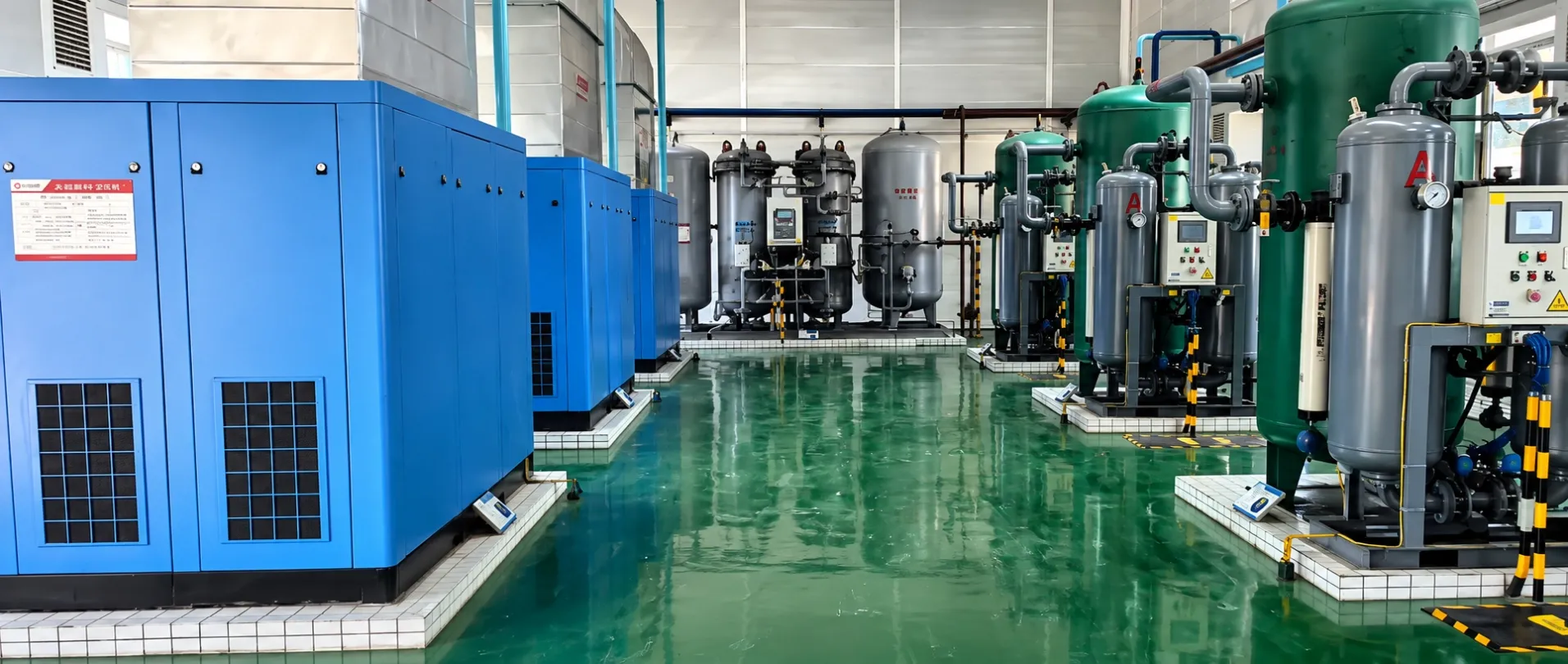
An air compressor receiver tank stores compressed air between the compressor and the points of use. It acts as a buffer when plant air demand changes, helping the system maintain more stable pressure and supply short bursts of high airflow.
For CNC machines, automated production lines, pneumatic tools and general manufacturing, a properly selected compressed air receiver tank can improve system stability and reduce unnecessary compressor cycling. It can also provide a location where cooled condensate collects for controlled drainage.
However, a receiver tank is not a substitute for adequate compressor capacity, correct piping or compressed-air treatment. Understanding its real functions helps buyers choose the right tank and avoid common system-design mistakes.
What Is an Air Compressor Receiver Tank?
An air receiver is a pressure vessel that stores compressed air at a specified working pressure. It is normally installed downstream of the compressor, although its exact position depends on whether it is used as a wet receiver, dry receiver or local point-of-use receiver.
The stored air provides a buffer between two processes that rarely match perfectly:
- The compressor produces air according to its capacity and control method.
- Production equipment consumes air according to changing operating cycles.
The receiver absorbs part of this mismatch so the compressor does not need to react instantly to every short-term change in demand.
Seven Reasons to Use a Compressed Air Receiver Tank
1. It Helps Stabilize Compressed-Air Pressure
Industrial air demand changes whenever valves switch, cylinders move or pneumatic tools start. If several devices operate together, the instantaneous flow requirement may be much higher than the normal average.
The receiver releases stored air during these peaks and is replenished when demand falls. This helps reduce rapid pressure fluctuations at downstream equipment.
The tank cannot compensate indefinitely for an undersized compressor, small pipework or blocked filters. It is designed primarily to manage temporary variations rather than continuous capacity shortages.
2. It Supplies Short-Term Peak Air Demand
Many industrial processes consume air in short, repeated bursts. Typical examples include CNC tool changing, pneumatic clamping, pulse-jet cleaning, product ejection and large cylinder movements.
A local or central receiver can supply part of this peak demand without requiring the compressor to be sized solely around a few seconds of maximum flow. After the event, the compressor recharges the tank during a lower-demand period.
For this benefit to work, receiver volume, allowable pressure drop and recharge time must be calculated around the real duty cycle.
3. It Can Reduce Excessive Start/Stop or Load/Unload Cycling
A system with very little storage may cause a compressor to change operating state too frequently. Repeated motor starts, rapid load/unload cycles and unstable control can increase wear and reduce operating reliability.
Additional storage creates a larger pressure-volume buffer, potentially extending the time between control events. The actual energy benefit depends on compressor technology and control settings. Installing a larger tank without reviewing controls, leaks and system pressure does not automatically reduce electricity consumption.
4. It Supports More Stable Compressor Control
Compressors normally operate between defined pressure setpoints. The receiver provides usable stored volume within that pressure band, giving the controller time to start, stop, load, unload or adjust compressor output.
The receiver does not independently switch off the compressor. Pressure sensors and the compressor controller make that decision. The tank supports the process by slowing the rate of pressure change.
5. It Allows Compressed Air to Cool and Condensate to Collect
Air becomes hot during compression. As it travels downstream and cools, some water vapor condenses into liquid water. A receiver can provide additional cooling time and a collection point for this liquid.
The accumulated condensate must be removed through a suitable manual or automatic drain. If the drain fails or is not maintained, water can collect inside the vessel and may be carried downstream.
Importantly, an air receiver does not remove all moisture. It may separate liquid that has already condensed, but water vapor remains in the airflow. Applications requiring controlled pressure dew point still need an appropriate refrigerated or desiccant dryer. Sensitive machines may also benefit from filters and a point-of-use liquid separator.
6. It Provides Limited Air During Brief Interruptions
Stored compressed air can sometimes help equipment finish a cycle or move to a safe state during a short compressor interruption. How long the air lasts depends on tank volume, initial and minimum usable pressure, and downstream consumption.
Where emergency pneumatic power is safety-critical, the storage arrangement should be specifically calculated and validated. A standard receiver should not automatically be considered an emergency backup system.
7. It Can Separate High-Demand Equipment from the Main System
A point-of-use receiver installed near a machine can reduce the effect of short, high-flow events on the rest of the plant. This is useful when a pneumatic process causes a recurring pressure dip even though average compressor capacity is adequate.
Local storage is not a remedy for undersized supply piping. The pipe feeding the local receiver must still recharge it before the next production cycle.
Wet Receiver vs. Dry Receiver
A wet receiver is generally installed before the compressed-air dryer. It can help cool the air, collect bulk condensate and reduce sudden load variations reaching the dryer. Because it receives untreated air, effective automatic drainage is especially important.
A dry receiver is installed after the dryer and filtration system. It stores treated air and can help stabilize downstream pressure and demand. Its placement may also reduce unnecessary cycling of the dryer and compressor, depending on the system design.
Some installations use both. The correct arrangement depends on compressor controls, air quality requirements, available space and the consumption profile.
How to Select the Right Air Receiver Tank
Receiver selection should not be based on compressor power alone. Important information includes:
- Compressor capacity and control method
- Normal and peak air consumption
- Duration and frequency of peak demand
- Maximum allowable working pressure
- Acceptable pressure drop at the equipment
- Required recharge time
- Air-treatment arrangement
- Installation environment and applicable pressure-vessel regulations
A common rule of thumb can provide a preliminary estimate, but applications with large intermittent demand should be calculated from the required air volume and permitted pressure range.
Installation and Safety Checklist
Before commissioning a compressed air storage tank, verify the following:
- The tank's maximum allowable working pressure is suitable for the system.
- The vessel documentation and certification meet local requirements.
- A correctly rated pressure-relief valve is fitted directly to the protected vessel.
- A readable pressure gauge is installed.
- Condensate can be drained safely and inspected.
- The tank is securely mounted with adequate service access.
- Isolation and bypass arrangements do not defeat pressure protection.
- The vessel is included in the site's inspection and maintenance program.
Do not weld, drill or modify a pressure vessel without approval from a qualified authority or the original manufacturer.
Does a Receiver Tank Remove Water from Compressed Air?
It helps remove some liquid condensate, but it does not fully dry compressed air.
Cooling inside the tank can cause water vapor to condense. The resulting liquid settles at the bottom and can be discharged through a drain. Water vapor that has not condensed continues downstream, so a dryer is required when a specific pressure dew point must be maintained.
If liquid water still reaches CNC machines, pneumatic valves or spray equipment after central treatment, the system should be checked for dryer performance, drainage, pipe temperature changes and downstream condensation. Point-of-use liquid separation may then provide additional protection against already-condensed water and oil droplets.