
Jul 10, 2026Compressed Air Problems
Why Compressed Air Quality Matters in Precision Machinery Manufacturing
Learn why compressed air quality is critical in precision machinery manufacturing. Clean, dry, and stable air helps protect CNC machines, pneumatic systems, surface cleaning, and testing processes.
Introduction
In modern precision machinery manufacturing, compressed air is more than a general utility. It is an important part of many production processes, including high-precision machining, pneumatic control, surface cleaning, assembly, and testing.
For industries that produce precision mechanical parts, CNC components, automation equipment, medical devices, optical parts, and high-end industrial machinery, compressed air quality can directly affect product accuracy, equipment lifespan, production stability, and maintenance cost.
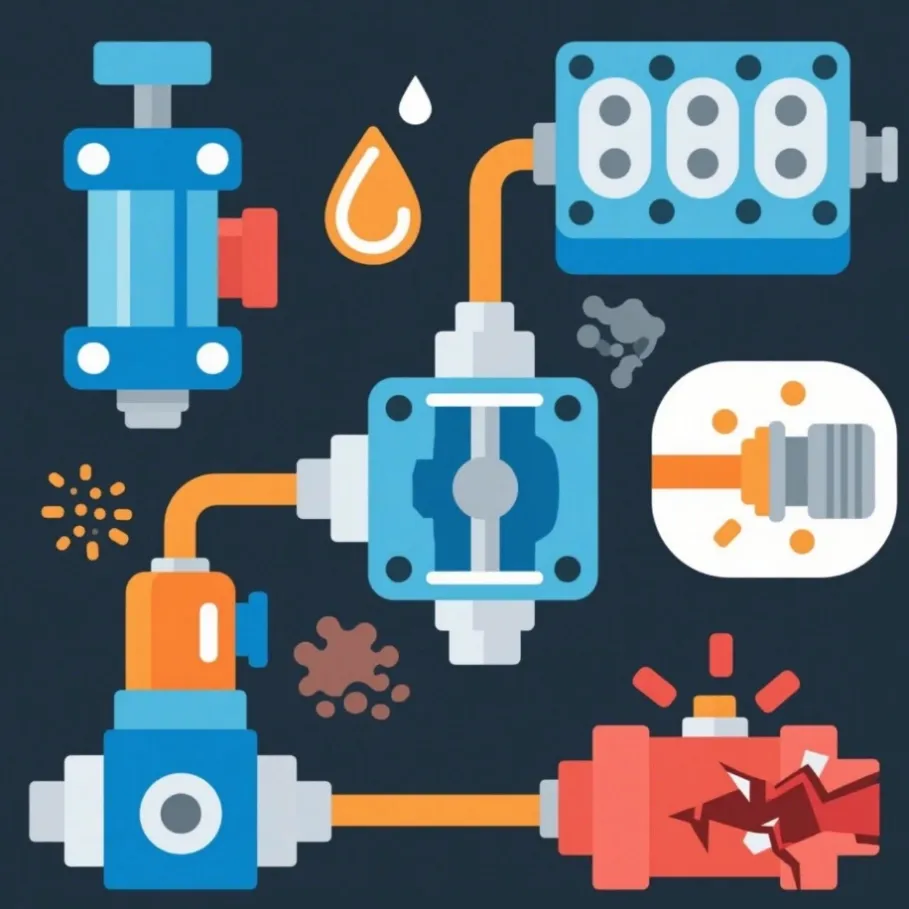
If compressed air contains water, oil, dust, or unstable pressure, it may cause equipment failure, surface contamination, corrosion, poor machining accuracy, and unexpected downtime.
This is why precision machinery manufacturers need to pay close attention to compressed air quality.
Key Quality Requirements for Compressed Air
The quality of compressed air is usually evaluated by several key factors:
Cleanliness
Cleanliness refers to the level of oil, particles, dust, rust, and other contaminants in compressed air.
In precision machinery manufacturing, even very small particles may damage sensitive components or contaminate product surfaces.
Dryness
Dryness refers to the moisture level in compressed air, often measured by pressure dew point.
Moisture is one of the most common causes of corrosion, pneumatic component failure, and surface quality problems.
Pressure Stability
Stable pressure is important for pneumatic tools, cylinders, actuators, measuring equipment, and automated production systems.
Pressure fluctuation may lead to unstable motion, reduced control accuracy, or inconsistent production results.
For precision manufacturing, compressed air should not only be available. It should also be clean, dry, and stable at the point where it is used.
1. High-Precision Machining Centers
High-precision machining equipment, such as five-axis machining centers, precision milling machines, precision lathes, and grinding machines, often use compressed air for different functions.
Compressed air may be used for:
- Spindle protection
- Tool changing mechanisms
- Air blowing and chip removal
- Cooling support
- Pneumatic clamping
- Linear motion and control components
In these applications, poor compressed air quality can create serious problems.
Possible Problems Caused by Poor Air Quality
Loss of Spindle Accuracy
Water, oil, and solid particles may enter sensitive areas and damage precision bearings. Over time, this can affect spindle accuracy and machining quality.
Corrosion of Guide Rails and Ball Screws
Moisture in compressed air can cause metal parts to rust. For precision machinery, corrosion on guide rails, ball screws, and moving parts may reduce positioning accuracy and shorten equipment lifespan.
Failure of Pneumatic Components
Particles, oil, and water can block or damage precision pneumatic components, such as cylinders, solenoid valves, and control valves. This may lead to slow response, abnormal movement, or equipment shutdown.
For high-precision machining equipment, compressed air quality requirements are often stricter than general industrial air supply. In some applications, users may require low oil content, low particle levels, and a low pressure dew point to protect sensitive components.
2. Pneumatic Control Systems and Actuators
Many automated production lines and precision machines use pneumatic control systems. These systems may include:
- Precision cylinders
- Solenoid valves
- Valve islands
- Pneumatic grippers
- Actuators
- Air tools
- Positioning devices
- Clamping systems
These components depend on clean and dry compressed air to operate reliably.
Why Air Quality Matters for Pneumatic Components
Valve Sticking or Wear
If compressed air contains particles, oil sludge, or moisture, valve cores may stick or wear faster. This can cause delayed action, unstable movement, or complete failure.
Seal Aging and Deformation
Water and oil contamination may affect rubber seals and other sealing materials. Over time, seals may swell, harden, deform, or lose sealing performance.
Blocked Air Passages
Small passages inside precision pneumatic components can be blocked by particles, oil deposits, or rust. This reduces system efficiency and increases maintenance risk.
In automated equipment, one unstable pneumatic component can affect the whole production process. Therefore, compressed air quality is closely related to automation reliability.
3. Precision Cleaning and Surface Treatment
Before final assembly, coating, welding, inspection, or packaging, precision parts often need to be cleaned. Compressed air is commonly used for blowing, drying, and removing small chips, dust, or residues from surfaces.
This process looks simple, but it has high requirements for air quality.
Risks of Contaminated Compressed Air
If compressed air contains oil, moisture, or particles, it may leave contamination on the workpiece surface.
This can cause:
- Oil film on metal surfaces
- Water marks or stains
- Poor coating adhesion
- Welding defects
- Surface oxidation
- Contamination on optical or precision surfaces
- Cleaning failure before assembly
For parts such as precision bearings, optical components, sensors, molds, machined parts, and high-value assemblies, contaminated air may create quality problems that are difficult to detect immediately.
In cleaning and surface treatment processes, compressed air should be dry, oil-free, and particle-controlled.
4. Precision Assembly and Testing Environments
Precision machinery manufacturing often includes assembly and testing in controlled environments, such as clean rooms, temperature-controlled workshops, or humidity-controlled production areas.
Compressed air may be used in these areas for:
- Pneumatic screwdrivers
- Pneumatic torque tools
- Small assembly fixtures
- Air blowing
- Air curtains
- Leak testing
- Functional testing
- Product protection
- Clean air support
Impact on Assembly Quality
If compressed air is not clean and dry, it may affect both the tools and the product.
For example, contaminated air may reduce the torque accuracy of pneumatic tools, pollute product surfaces, or introduce moisture into sensitive assemblies.
Impact on Testing Accuracy
In leak testing, pressure testing, or air-flow testing, unstable air pressure or moisture can affect test consistency and accuracy.
For industries such as medical device manufacturing, electronics, optical equipment, and precision instruments, compressed air may need to meet even stricter cleanliness and dryness requirements.
5. Common Contaminants in Compressed Air Systems
Compressed air contamination usually comes from several sources.
Ambient Air
The compressor takes in surrounding air. Dust, humidity, oil vapor, and other airborne contaminants may enter the compressed air system during intake.
Compressor Operation
Oil-lubricated compressors may introduce oil aerosols or oil vapor into the compressed air stream. Even oil-free compressors still need proper downstream air treatment because they cannot remove all contaminants from the intake air or piping system.
Pipelines and Storage Tanks
Old pipelines, air receivers, and distribution systems may create rust, scale, condensate, and particles. These contaminants may travel downstream and affect equipment-side air quality.
Temperature Changes
As compressed air cools in pipelines, water vapor may condense into liquid water. This is one of the main reasons why moisture problems may still appear near machines, even when central air treatment equipment is installed.
6. Why Central Air Treatment May Not Be Enough
Many factories install compressed air treatment equipment in the compressor room, such as aftercoolers, receivers, filters, and dryers. These systems are very important, but they may not solve every air quality problem at the machine side.
After compressed air leaves the compressor room, it may travel through long pipelines, branch lines, valves, and storage tanks before reaching the equipment.
During this process:
- Air temperature may drop.
- Condensate may form again.
- Rust or particles may enter from old pipes.
- Drain valves may fail.
- Some machines may require higher air quality than the general air supply.
- Local installation conditions may create additional moisture risks.
This is why point-of-use air treatment is important in many precision manufacturing applications.
Point-of-use air treatment means installing additional air treatment equipment close to the machine inlet or critical air-use point. It provides extra protection before compressed air enters sensitive equipment.
This approach is especially useful for:
- CNC machines
- Precision machining centers
- Pneumatic valve stations
- Automation equipment
- Testing equipment
- Assembly workstations
- Air blowing and cleaning points
- Equipment with repeated moisture problems
Point-of-use protection does not necessarily replace the central dryer or filters. In many systems, it works together with the central air treatment system to improve air quality at critical points.
7. Recommended Air Treatment Strategy for Precision Manufacturing
A reliable compressed air treatment strategy should be designed according to the actual application and air quality requirements.
For precision machinery manufacturing, the following approach is often useful:
Step 1: Identify Critical Air-Use Points
Not all compressed air points require the same quality level. Factories should identify which machines, processes, or workstations are most sensitive to moisture, oil, particles, or pressure fluctuation.
Step 2: Control Moisture at Multiple Stages
Moisture control may include aftercoolers, air receivers, refrigerated dryers, desiccant dryers, drain valves, and point-of-use dryers depending on the required dew point and application.
Step 3: Use Proper Filtration
Different filters may be required to remove particles, oil aerosols, or fine contaminants. Filter selection should consider flow rate, pressure drop, air quality target, and maintenance requirements.
Step 4: Maintain Drainage Systems
Drain valves should be checked regularly. Failed drains can allow water to accumulate and move downstream, causing repeated moisture problems.
Step 5: Protect the Equipment Side
For sensitive machines or local problem points, point-of-use air treatment can provide an additional layer of protection close to the equipment.
Step 6: Monitor and Maintain the System
Regular inspection and maintenance are necessary to keep air quality stable. This may include checking pressure drop, dew point, filter condition, drain operation, and pipeline condition.
Compressed air quality is not a one-time installation issue. It requires continuous management.
8. Benefits of High-Quality Compressed Air
For precision machinery manufacturers, improving compressed air quality can bring several practical benefits.
Better Machining Accuracy
Clean and dry compressed air helps protect spindles, guide rails, pneumatic clamping systems, and tool-changing mechanisms.
Longer Equipment Life
Reducing water, oil, and particles helps prevent corrosion, wear, and premature failure of pneumatic and mechanical components.
More Stable Automation
Reliable air quality supports stable cylinder movement, valve response, and actuator performance.
Better Surface Quality
Dry and clean air reduces the risk of oil film, water stains, and particle contamination during cleaning and surface preparation.
Lower Maintenance Cost
Good air treatment can reduce valve failure, filter blockage, corrosion, downtime, and unplanned repair work.
Improved Production Reliability
Stable compressed air helps maintain consistent production performance, especially in automated and high-precision manufacturing environments.
Conclusion
In precision machinery manufacturing, compressed air quality directly affects equipment reliability, product accuracy, surface quality, and production efficiency.
High-precision machining centers, pneumatic control systems, cleaning processes, assembly lines, and testing environments all depend on clean, dry, and stable compressed air.
If compressed air contains moisture, oil, particles, or unstable pressure, it may cause equipment wear, corrosion, pneumatic failure, product contamination, and production downtime.
A complete compressed air treatment strategy should include central air treatment, proper filtration, moisture control, condensate drainage, regular maintenance, and point-of-use protection for sensitive equipment.
For modern precision manufacturing, compressed air is not only a utility.
It is part of the quality control system.