
Aug 27, 2026Compressed Air Problems
Why Automatic Drain Valves Matter in Compressed Air Systems
Learn how condensate forms and how automatic drain valves protect compressed air systems while reducing manual drainage and compressed-air waste.
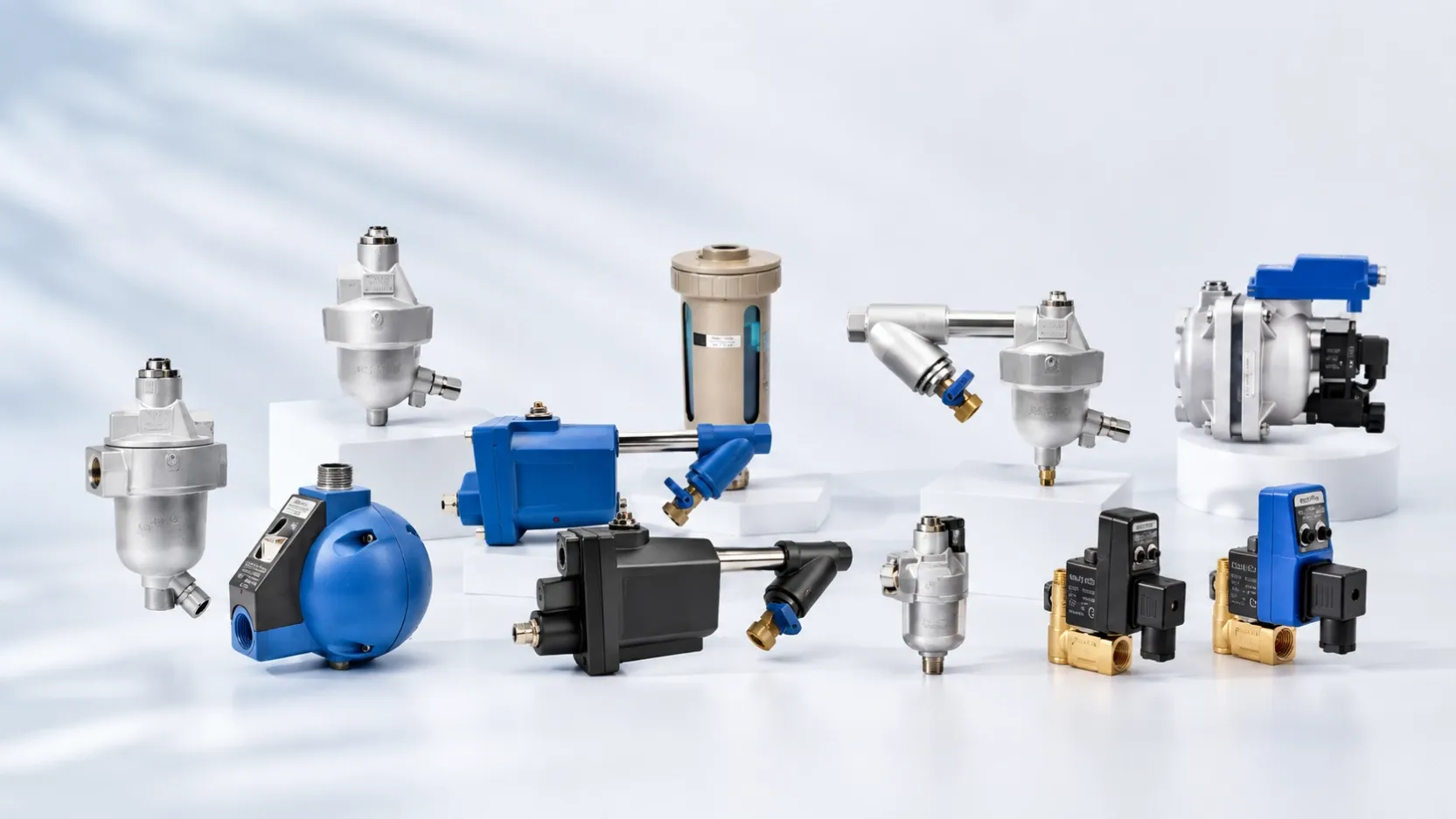
Compressed air is often described as the “fourth utility” of industrial production. It powers pneumatic tools, cylinders, valves, CNC machines, automation systems and many other critical processes.
However, every compressed air system also generates condensate.
If this liquid is not removed reliably, it can accumulate inside air receivers, moisture separators, filters, dryers and pipelines. The result may be internal corrosion, unreliable pneumatic equipment, contaminated processes and additional maintenance.
An automatic drain valve removes accumulated condensate without depending on operators to open a manual valve. Selecting the right drain type can also reduce unnecessary compressed-air loss and improve overall system reliability.
Why Does Condensate Form in a Compressed Air System?
Atmospheric air always contains water vapor. The amount depends mainly on ambient temperature and relative humidity.
When air enters a compressor, both the air and its water vapor are compressed. The discharge air is initially hot, but it cools as it passes through an aftercooler, air receiver, dryer and distribution piping.
Cooler air cannot retain the same amount of water vapor. Once the compressed air temperature falls below its pressure dew point, part of the vapor condenses into liquid water.
Condensate commonly forms in the following locations:
- Compressor aftercoolers
- Moisture separators
- Air receivers
- Refrigerated air dryers
- Compressed air filters
- Low points in distribution piping
- Long downstream pipelines
- Equipment installed in cooler production areas
More condensate may be produced during hot and humid weather, when compressor intake air contains a higher moisture load.
What Happens If Condensate Is Not Removed?
1. Internal corrosion
Standing water can contribute to corrosion inside steel air receivers, pipelines, valves and other components. Rust particles may then travel downstream and contaminate pneumatic equipment.
2. Reduced compressed-air quality
Liquid water can reach pneumatic valves, cylinders, tools or production processes. It may contribute to sticking components, inconsistent motion and increased maintenance.
Applications such as spray painting, precision measurement and CNC machining may be particularly sensitive to liquid water, oil droplets and particulate contamination.
3. Filter and dryer problems
Excess condensate can overload filters and moisture separators. If a drain becomes blocked, collected liquid may be carried back into the air stream.
A dryer can also appear to be operating while a failed separator drain allows liquid condensate to continue downstream.
4. Unplanned maintenance
Manual drains are easily forgotten, especially when they are installed under receivers, inside equipment or in difficult-to-access areas.
Condensate-related failures may lead to additional inspections, replacement of pneumatic components and production interruptions.
5. Compressed-air waste
Some timer-controlled drains open even when no liquid is present. If the opening time is too long, valuable compressed air escapes during every cycle.
The U.S. Department of Energy includes “remove condensate with minimal air loss” among its recommended compressed-air system practices. (DOE compressed-air resources)
What Is an Automatic Drain Valve?
An automatic drain valve is installed at a condensate collection point and discharges accumulated liquid without requiring routine manual operation.
Depending on the design, the drain may operate according to:
- A preset time interval
- A mechanical float
- An electronic level sensor
- A pressure or differential operating mechanism
The drain should open when condensate is present and close after the liquid has been discharged.
An automatic drain is not an air dryer. It removes liquid already collected at a specific location; it does not lower the pressure dew point or remove all water vapor from the compressed air.
Main Types of Automatic Condensate Drains
Timer-controlled solenoid drains
A timer drain opens at preset intervals for a specified duration.
Advantages:
- Simple design
- Low initial cost
- Adjustable drainage interval
- Suitable for many general applications
Limitations:
- May open when no condensate is present
- Can waste compressed air if incorrectly adjusted
- Requires an electrical supply
- Settings may need seasonal adjustment
Timer drains work best when the condensate load is reasonably predictable and the opening time is carefully set.
Mechanical float drains
A mechanical float drain responds directly to the liquid level.
As condensate accumulates, the float rises and activates the discharge mechanism. When the liquid level falls, the drain closes again.
Advantages:
- No electricity required
- Responds to actual condensate accumulation
- Avoids programmed blowdown cycles
- Suitable for remote or difficult installation locations
Limitations:
- Internal passages may be affected by heavy oil sludge, rust or particulate contamination
- Installation orientation and available space must be checked
- Periodic inspection is still required
Electronic level-sensing drains
Electronic zero-loss drains use a sensor to detect the condensate level and control a discharge valve.
Advantages:
- Discharges according to actual liquid level
- Can reduce unnecessary air loss
- Suitable for changing condensate loads
- Some models provide alarms or operating status
Limitations:
- Requires electrical power
- Higher initial cost
- Sensor condition and valve operation require maintenance
- Compatibility with oil and contamination must be verified
Why Choose a Zero Air Loss Automatic Drain?
Compressed air is expensive to generate. A drain that releases excessive air increases operating cost even though the leak may appear small.
A zero air loss automatic drain is designed to discharge accumulated liquid without a fixed compressed-air blowdown cycle.
Potential benefits include:
- Less unnecessary compressed-air loss
- Automatic drainage based on actual condensate accumulation
- Reduced dependence on manual drainage
- More stable condensate management
- Lower risk of water accumulating inside receivers and filters
- No electrical wiring for mechanical models
- Easier installation in remote system locations
Actual energy savings depend on the previous drainage method, operating pressure, drain settings and system running hours.
Where Should Automatic Drain Valves Be Installed?
A compressed air system may require more than one drain. Common installation points include:
Aftercoolers and moisture separators
Large quantities of condensate may form when hot compressor discharge air is cooled.
Air receivers
Both wet receivers and dry receivers should be inspected for condensate accumulation. The required drain configuration depends on the system layout.
Compressed air filters
Filters and water separators need reliable drainage so that collected liquid is not carried downstream again.
Refrigerated air dryers
Condensate separated during cooling must be discharged reliably. A blocked drain can affect dryer performance and downstream air quality.
Pipeline low points
If condensate collects in a low section of the distribution system, a drip leg and suitable drain may be required.
Point-of-use air treatment
Where downstream cooling creates additional liquid water, a point-of-use liquid separator and automatic drain can provide final protection before sensitive equipment.
Automatic Drain vs. Point-of-Use Liquid Separator
These two products perform different but complementary functions.
An automatic drain valve removes liquid that has already collected inside an air receiver, filter, dryer or separator.
A point-of-use compressed air liquid separator removes entrained liquid water, oil droplets and particulates from the moving air stream before it enters sensitive equipment.
For example:
- A separator captures liquid contamination from the compressed air.
- The drain valve discharges the collected liquid automatically.
Together, they provide multi-stage condensate separation and drainage. Neither product replaces an air dryer when water-vapor control or a specific pressure dew point is required.
How to Select the Right Automatic Drain Valve
Before choosing a drain, confirm the following information:
- Installation location
- Maximum working pressure
- Maximum operating temperature
- Inlet and outlet connection sizes
- Estimated condensate volume
- Amount of oil, sludge, rust or particles
- Electrical power availability
- Required installation orientation
- Discharge piping arrangement
- Local condensate disposal requirements
For heavily contaminated systems, consider a drain with a large internal passage, pre-filtration or a cleaning mechanism.
The discharge line should also be sized and routed correctly. Excessive backpressure, long narrow tubing or an incorrect installation angle may prevent reliable drainage.
Need Help Selecting an Automatic Drain Valve?
Unsure which drain configuration is suitable for your compressor, receiver, filter or dryer?
Send us:
- System operating pressure
- Connection size
- Installation location
- Photos of the existing system
- Condensate and contamination conditions
- Estimated drainage volume
ENHUI TECH can recommend a suitable automatic drain valve or condensate-removal combination for your application.