
Where to Install a Compressed Air Precision Separator
Learn where to install a compressed air precision separator, how to use it with an air dryer, and what to check to help protect your tools and machines from liquid water, oil droplets and particles.
Water in compressed air lines can reach air tools, valves and cylinders, causing rust, uneven operation and extra maintenance. Even when a workshop has an air dryer, liquid water may still appear near the equipment.
An ENHUI compressed air precision separator removes liquid water, oil droplets and particles before the air enters the machine. It needs no electricity or replacement filter element, and collected liquid is released through an automatic drain.
Choosing the right installation point helps it do its job. Here are the main things to consider.
1. Install It Close to Where the Air Is Used
“Point of use” simply means the place where compressed air enters a tool or machine.
For equipment protection, install the separator close to that point. This could be the air inlet of a CNC machine, an automated production unit or a workshop air-tool station.
Keep the pipe or hose after the separator as short as practical. If the air travels a long distance and cools further, water vapor can turn into liquid again after it has passed through the separator.
A typical layout:
Air supply → Workshop piping → ENHUI precision air separator → Tool or machine
Leave enough space to inspect the unit and check the drain.
2. Pay Attention to Cooler Areas of the Workshop
Compressed air often cools as it moves away from the compressor. When it becomes cold enough, moisture in the air turns into water droplets inside the pipe.
Look for places where this happens, such as long pipe runs or cooler sections of the building. Where practical, place the separator after the air has cooled and close to the equipment it protects.
Avoid leaving a long, cold pipe between the separator and the machine. Also keep the separator and drain protected from freezing.
3. Plan Around Your Workshop Layout
One separator may serve a small group of nearby workstations if it can handle their combined air use. Equipment farther away may need its own unit.
In an automotive workshop, useful locations include:
- Before a group of nearby air-tool outlets.
- Near the air supply to a tyre changer or wheel balancer.
- Directly before valuable pneumatic equipment.
For CNC machines and automation equipment, a dedicated separator at the machine inlet can provide local protection.
There is no single installation distance that suits every workshop. Pipe length, temperature and the number of tools used at the same time all affect the choice. Select a model that matches the actual airflow and working pressure.
4. Using It with an Existing Air Dryer
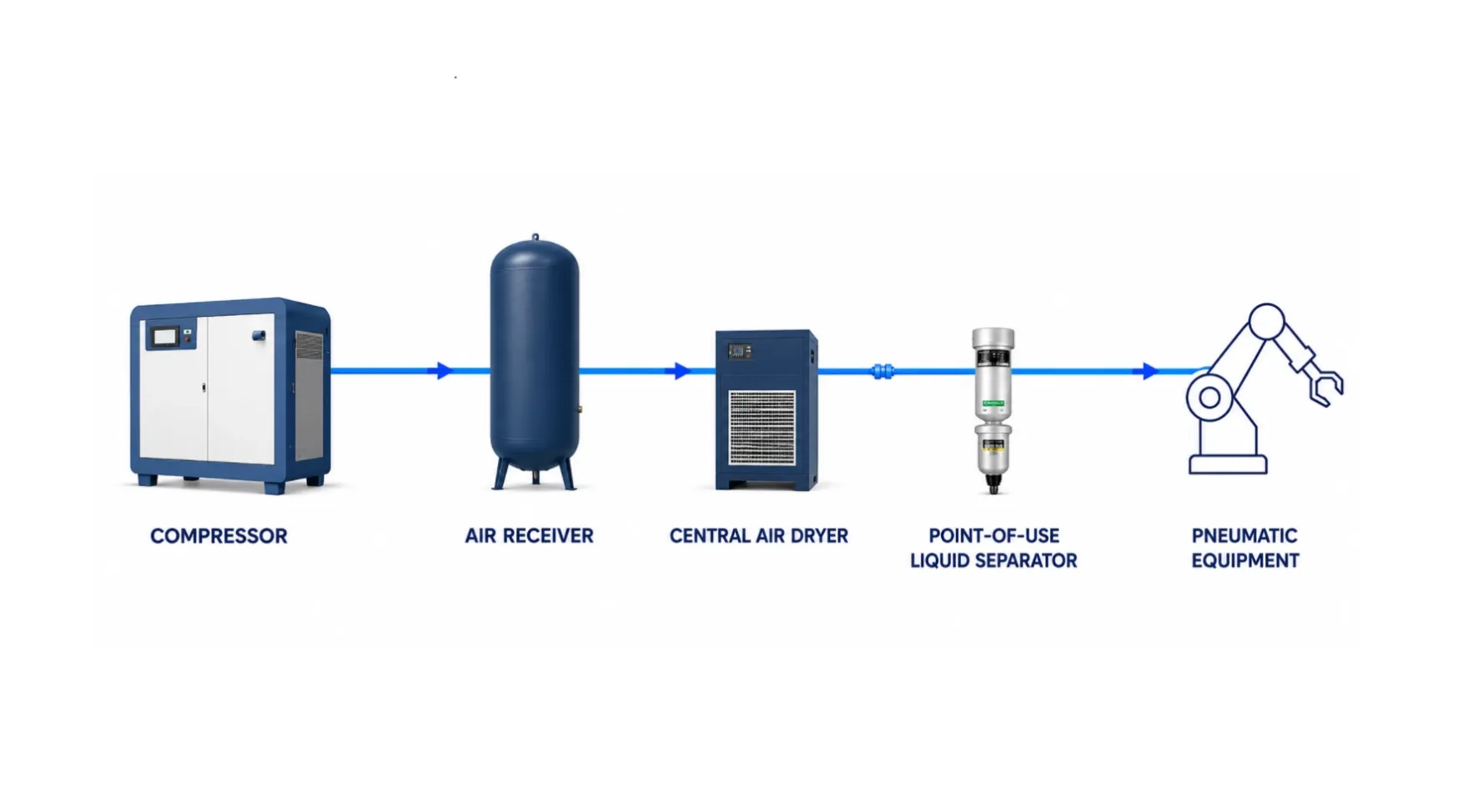
A central air dryer and a point-of-use separator can work together.
The dryer reduces water vapor in the air. The separator removes liquid water that reaches its installation point. Local separation can help protect equipment from remaining liquid or water that forms farther along the pipe.
A typical layout:
Compressor system → Air dryer → Workshop piping → ENHUI precision air separator → Equipment
If water keeps appearing downstream, also check the dryer and the system's drains. Adding a separator does not remove the need to keep the existing system working properly.
Can It Be Used Without an Air Dryer?
Yes, it can remove liquid water directly before equipment. However, it does not remove water vapor or make the air dry enough for every application.
If the machine requires very dry air, or the downstream pipe becomes cold enough for more water to form, a suitable dryer is still needed.
5. Using It Before a Desiccant Dryer
A desiccant dryer uses moisture-absorbing material to remove water vapor. Large amounts of liquid water entering the dryer can place extra strain on that material.
A suitably selected separator installed upstream can remove bulk liquid before it reaches the dryer. Keep any other filters required by the dryer manufacturer in place.
This arrangement supports the existing treatment system; it does not replace the dryer's required filters or servicing.
6. Extra Care for Paint Shops
Air tools used for sanding, grinding and polishing benefit from protection against liquid water and dirt.
Spray painting has different requirements. Small amounts of oil or other contamination can affect the finish, so additional fine filtration and oil-vapor treatment may be needed after the separator. Follow the requirements of the spray equipment and coating process.
A precision air separator alone does not make compressed air suitable for breathing. Breathing-air systems require dedicated treatment and testing.
A Simple Installation Checklist
Before putting the equipment back into use, check that:
- The separator is close to the protected tool or machine.
- The model suits the airflow and working pressure.
- The unit follows the marked airflow direction and approved mounting position.
- The downstream hose is as short as practical.
- The drain can discharge freely.
- Any additional filters or dryer required by the application remain in place.
The aim is simple: remove liquid before it reaches the equipment, and avoid giving the air a long journey in which more water can form.
For help choosing a location or model, send ENHUI TECH a photo of your air line, the equipment type and its air requirements.