
Jul 10, 2026
What Are Push-in Fittings? Types, Applications, Selection Guide, and Installation Tips
Learn what push-in fittings are, how they work, common types, materials, applications, selection tips, and installation methods for reliable pneumatic and fluid connections.
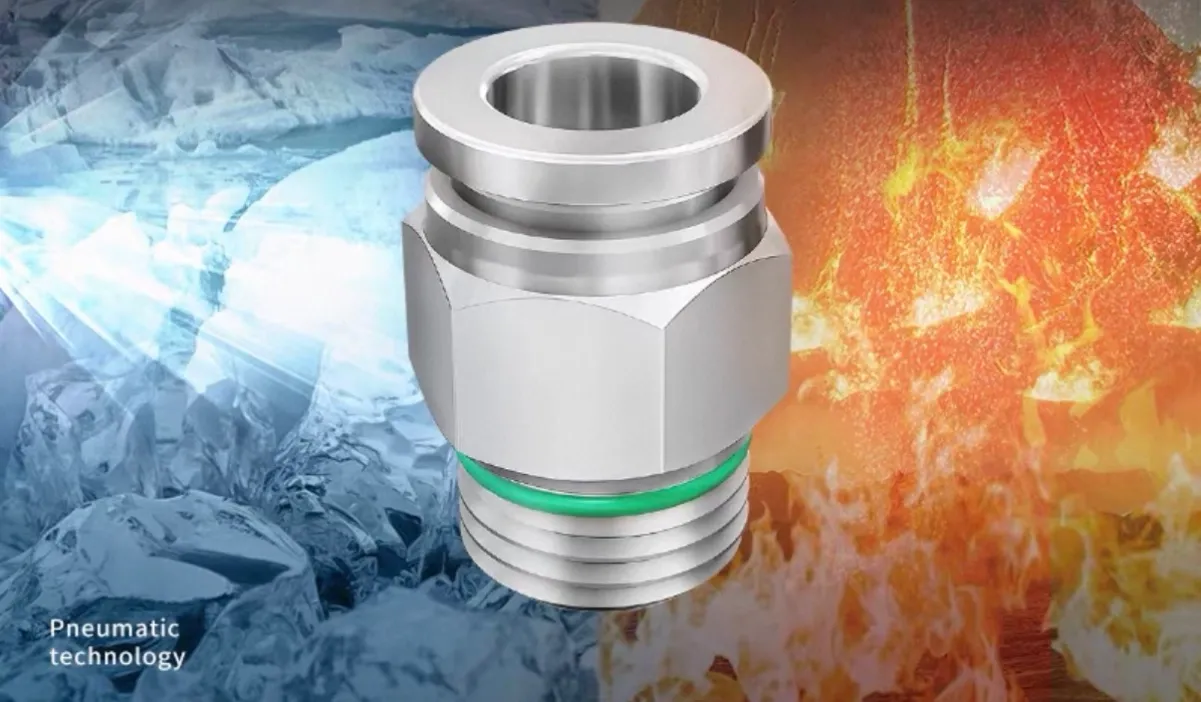
Introduction
Push-in fittings, also known as push-to-connect fittings or quick-connect fittings, are widely used in pneumatic systems, fluid transfer lines, industrial equipment, automation systems, and many other piping applications.
They are designed for fast installation, easy disassembly, and reliable sealing. Compared with traditional threaded or compression fittings, push-in fittings can help reduce installation time and simplify maintenance work.
In pneumatic systems, push-in fittings are commonly used to connect air tubes, cylinders, solenoid valves, air tools, filters, regulators, and other compressed air components.
This article explains how push-in fittings work, their common types, material options, selection factors, and installation precautions.
What Is a Push-in Fitting?
A push-in fitting is a connector that allows a tube to be inserted directly into the fitting body without complicated tools.
A typical push-in fitting usually includes:
- Fitting body
- Sealing ring or O-ring
- Gripping ring or collet
- Release sleeve
- Threaded or tube connection end
The working principle is simple. When the tube is inserted into the fitting, the internal gripping structure holds the tube securely in place. At the same time, the sealing ring creates an airtight or fluid-tight seal to prevent leakage.
To disconnect the tube, the user usually presses the release sleeve and pulls the tube out. This makes installation and maintenance much faster.
Main Advantages of Push-in Fittings
Push-in fittings are widely used because they provide several practical advantages.
Fast Installation
The tube can be inserted directly into the fitting, reducing installation time and labor cost.
Easy Maintenance
The tube can usually be released quickly when maintenance, replacement, or layout adjustment is required.
Reliable Sealing
A properly selected and installed push-in fitting can provide stable sealing performance and reduce air leakage.
Compact Design
Many push-in fittings are small and suitable for equipment with limited installation space.
Wide Application Range
Push-in fittings are available in different materials, sizes, thread types, shapes, and pressure ratings to meet different industrial needs.
Common Materials for Push-in Fittings
Push-in fittings can be made from different materials. The right material depends on the working environment, medium, pressure, temperature, and corrosion resistance requirements.
Plastic Push-in Fittings
Plastic push-in fittings are lightweight and cost-effective. They are often used in general pneumatic systems, low-pressure air lines, and non-corrosive environments.
They are suitable for many standard automation applications, but they may not be ideal for high-temperature, high-pressure, or corrosive environments.
Brass Push-in Fittings
Brass fittings offer better mechanical strength than plastic fittings and are widely used in pneumatic and fluid systems. They are suitable for many general industrial applications.
However, in highly corrosive, humid, or clean production environments, stainless steel may be preferred.
Stainless Steel Push-in Fittings
Stainless steel push-in fittings, especially 304 stainless steel pneumatic fittings, provide excellent corrosion resistance, strength, and durability.
They are suitable for demanding applications such as:
- Food processing equipment
- Medical equipment
- Packaging machinery
- CNC machines
- Automation equipment
- Humid environments
- Corrosive environments
- Clean manufacturing areas
- Compressed air systems requiring long service life
For applications where corrosion resistance and reliable sealing are important, stainless steel push-in fittings are often a better choice.
Common Applications of Push-in Fittings
Push-in fittings are used in many industries and systems.
Pneumatic Systems
This is one of the most common applications. Push-in fittings are used to connect pneumatic tubing, cylinders, valves, air tools, FRL units, and compressed air distribution components.
Industrial Automation
In automated equipment, push-in fittings are used in pneumatic control lines, valve islands, robotic systems, packaging machines, and assembly equipment.
Fluid Transfer
Some push-in fittings are designed for liquid media, such as water, cooling water, oil, or other compatible fluids. The material and sealing structure must be selected according to the medium.
Automotive Manufacturing
Push-in and quick-connect fittings are commonly used in production lines, pneumatic tools, testing systems, and assembly equipment.
Medical and Laboratory Equipment
Clean and corrosion-resistant fittings may be used in medical devices, laboratory instruments, and clean air or fluid systems.
Food and Beverage Equipment
Stainless steel fittings are often preferred in food-related equipment because they offer better corrosion resistance and are more suitable for environments requiring cleanliness and durability.
Semiconductor and High-Purity Applications
Special quick-connect fittings may be used in semiconductor production equipment for high-purity gases or liquids. These applications usually require very low leakage and strict material compatibility.
Main Types of Push-in and Quick-Connect Fittings
Push-in fittings can be classified in different ways.
By Medium
Air Push-in Fittings
These are mainly used in pneumatic piping and compressed air systems. They are available in many sizes, shapes, and materials.
Liquid Push-in Fittings
These fittings are used for water, oil, coolant, or other liquid media. Stainless steel or brass materials are often used depending on corrosion resistance requirements.
Hydraulic Quick Couplings
Hydraulic quick couplings are used in hydraulic systems. They are designed for higher pressure and stronger mechanical performance. Their structure is different from standard pneumatic push-in fittings.
Gas Quick Couplings
These fittings are used for gases such as oxygen, fuel gas, nitrogen, argon, or other inert gases. Safety, sealing, and material compatibility are very important in these applications.
By Structure
Straight-through Type
The internal flow path is open and allows media to pass through in both directions. This type usually provides higher flow capacity.
Single Shut-off Type
One side of the coupling has a valve. When disconnected, the valve closes automatically to reduce leakage.
Double Shut-off Type
Both sides have shut-off valves. When disconnected, both ends are closed to retain the medium inside the pipeline and reduce leakage.
Flat-face or Non-spill Type
This design helps minimize leakage during connection and disconnection. It is often used for applications where leakage control is important.
By Shape
Common pneumatic push-in fitting shapes include:
- Straight fittings
- Elbow fittings
- Tee fittings
- Y fittings
- Bulkhead fittings
- Reducer fittings
- Male threaded fittings
- Female threaded fittings
The correct shape should be selected according to the installation space and piping layout.
Standards and Specifications for Push-in Fittings
Push-in fittings and quick-connect fittings may follow different standards depending on the application, region, and system type.
Common specification items include:
- Tube outer diameter
- Thread size
- Connection type
- Working pressure
- Burst pressure
- Temperature range
- Sealing performance
- Material requirements
- Flow capacity
- Insertion and release force
- Corrosion resistance
- Environmental adaptability
Some commonly referenced standards for quick couplings include:
- ISO 6150 Series B for pneumatic quick couplings
- DIN 3869 for hydraulic sealing ring applications
- JIS B 8363 for pneumatic fluid power quick-action couplings
For general pneumatic push-in fittings, users should confirm compatibility based on tube size, thread type, working pressure, temperature, and medium.
How to Choose the Right Push-in Fitting
Choosing the correct push-in fitting is important for safety, sealing performance, and long-term reliability.
1. Confirm the Medium
First, confirm whether the fitting will be used for air, water, oil, coolant, gas, or another medium.
Not every push-in fitting is suitable for every medium. Material compatibility and seal compatibility must be checked.
2. Choose the Right Material
Material selection depends on the working environment.
- Plastic: lightweight and economical for standard pneumatic use
- Brass: suitable for many general industrial applications
- Stainless steel: better for corrosion resistance, humid environments, clean production, food equipment, and demanding applications
For corrosive, humid, or high-cleanliness environments, 304 stainless steel pneumatic fittings are often recommended.
3. Match Tube Size and Thread Size
The tube outer diameter and thread type must match the existing system.
Common pneumatic tube sizes include metric and inch sizes. Thread types may include BSPP, BSPT, NPT, metric thread, or other standards.
Incorrect sizing may cause poor sealing, leakage, or installation failure.
4. Check Working Pressure
The fitting must be suitable for the system’s working pressure.
Using a fitting beyond its pressure rating may cause leakage, tube release, or damage to the fitting.
5. Check Temperature Range
Temperature affects both the fitting body and the sealing material.
Some sealing rings work well at room temperature but may lose performance in high-temperature or low-temperature environments.
6. Consider Sealing Performance
Sealing performance depends on the fitting design, O-ring material, tube quality, and installation condition.
For demanding applications, users should consider fittings with reliable sealing design and suitable sealing materials.
7. Consider Installation Space
In compact equipment, elbow fittings, mini fittings, or rotating fittings may be needed.
The shape of the fitting should match the machine layout and tube routing.
8. Consider Application Requirements
Different applications have different priorities.
For example:
- Industrial automation may require stability and long service life.
- Food equipment may require corrosion resistance and cleanability.
- Temporary connections may prioritize quick operation and low cost.
- High-pressure or high-temperature systems may require stronger materials and special structures.
Common Causes of Leakage in Push-in Fittings
Leakage is one of the most common problems in pneumatic connections.
Common causes include:
- Tube not fully inserted
- Tube end not cut straight
- Tube outer surface scratched or damaged
- Wrong tube size
- Incorrect thread type
- No thread sealant or incorrect sealing method
- Damaged O-ring
- Excessive pressure
- Vibration or movement
- Corrosion of fitting body
- Use of incompatible medium
To reduce leakage, always use the correct fitting, cut the tube cleanly, insert the tube fully, and check the connection after installation.
Installation Tips for Push-in Fittings
Proper installation is important for sealing and service life.
Before Installation
Before installing the fitting:
- Make sure the tube and fitting are clean.
- Check that the tube size matches the fitting.
- Check that the thread type matches the equipment port.
- Inspect the tube end for scratches or deformation.
- Cut the tube end straight and clean.
- Remove dust, oil, and debris from the connection area.
During Installation
When installing:
- Insert the tube fully into the fitting.
- Make sure the tube reaches the required insertion depth.
- Do not use excessive force.
- Tighten threaded fittings properly.
- Use suitable thread sealant or sealing tape when required.
- Avoid bending the tube too close to the fitting.
- Fix the tube layout if vibration or movement is expected.
After Installation
After installation:
- Check for leakage.
- Make sure the tube is firmly held.
- Confirm that the system pressure is within the fitting rating.
- Inspect the connection during initial operation.
How to Remove a Tube from a Push-in Fitting
Before removing a tube, always release the pressure from the system.
Removal Steps
- Turn off the air or fluid supply.
- Release residual pressure from the line.
- Press the release sleeve evenly.
- Pull the tube out gently.
- Do not force the tube out without pressing the release sleeve.
- Inspect the tube and fitting after removal.
If the tube end is damaged, cut off the damaged part before reinstalling.
Maintenance Recommendations
Push-in fittings are low-maintenance components, but regular inspection is still important.
Users should check:
- Whether there is air leakage
- Whether the tube is loose
- Whether the fitting body is corroded
- Whether the O-ring is damaged
- Whether the tube end is scratched
- Whether the system pressure is stable
- Whether vibration affects the connection
For critical systems, fittings should be inspected during regular maintenance schedules.
Why Choose Stainless Steel Pneumatic Push-in Fittings?
For standard pneumatic systems, plastic or brass fittings may be enough. However, stainless steel push-in fittings are more suitable for demanding industrial environments.
304 stainless steel pneumatic push-in fittings offer:
- Better corrosion resistance
- Higher mechanical strength
- Longer service life
- Reliable sealing performance
- Good durability in humid environments
- Better suitability for clean and demanding equipment
- Stable connection for industrial compressed air systems
They are widely used in automation equipment, CNC machines, food processing equipment, packaging machinery, medical equipment, laser equipment, and compressed air systems.
For applications where reliability, cleanliness, corrosion resistance, and long-term performance are important, stainless steel pneumatic fittings can be a practical solution.
Conclusion
Push-in fittings are important components in pneumatic systems and industrial piping connections. They are valued for fast installation, easy removal, reliable sealing, and flexible application.
When selecting push-in fittings, users should consider the medium, material, pressure, temperature, tube size, thread type, sealing performance, and installation environment.
For general pneumatic systems, plastic or brass fittings may be suitable. For more demanding applications, such as food equipment, medical devices, CNC machines, packaging machinery, humid environments, or corrosion-sensitive areas, 304 stainless steel pneumatic push-in fittings provide better durability and long-term reliability.
A small fitting can have a big impact on system safety, air leakage, equipment performance, and maintenance cost. Choosing the right push-in fitting is an important step in building a reliable pneumatic system.