
Aug 10, 2026Compressed Air Problems
How to Choose Compressed Air Treatment Equipment
Learn how to choose compressed air treatment equipment based on contaminants, dew point, airflow and application requirements.
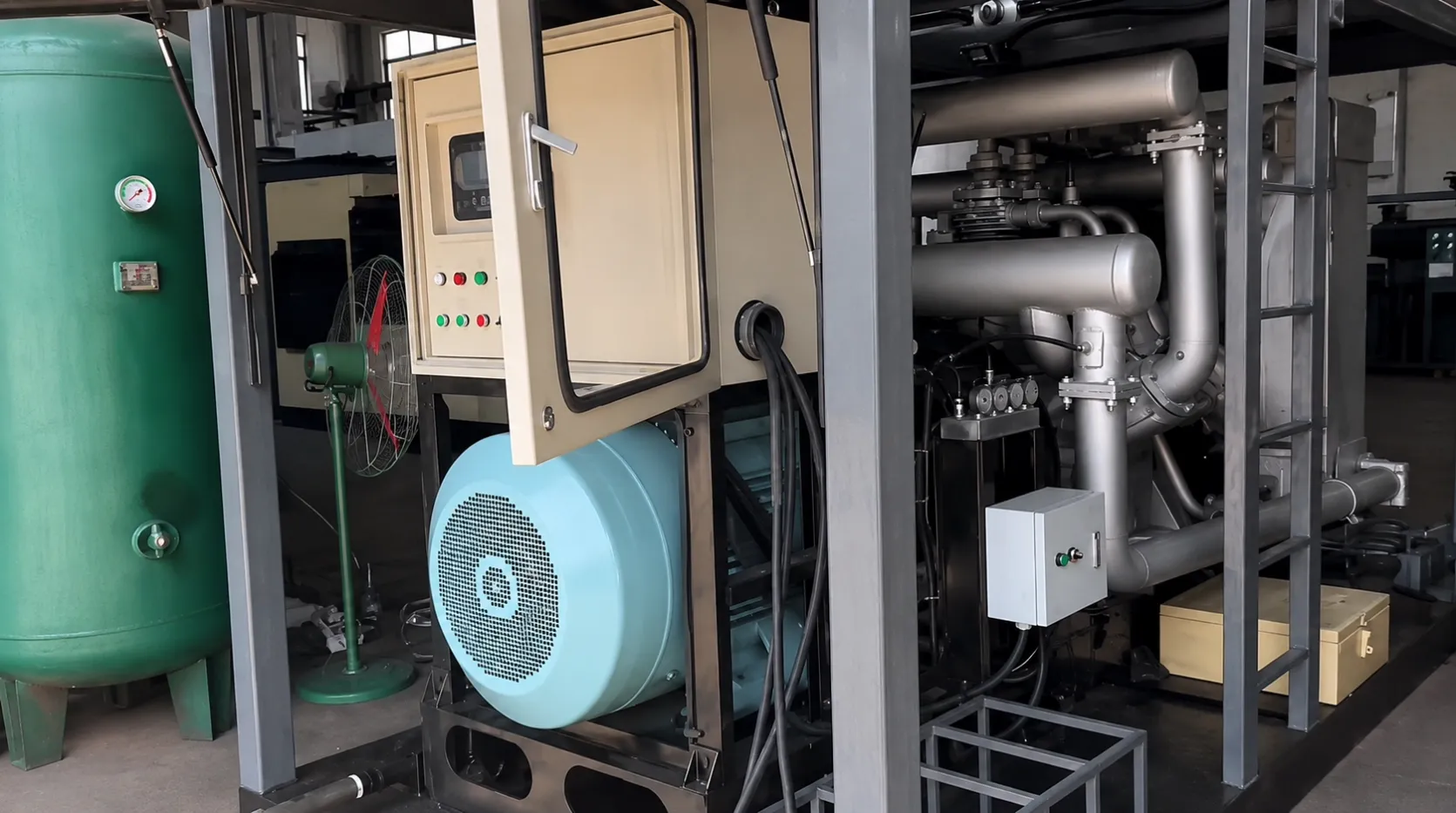
Choosing compressed air treatment equipment should not begin with a product name.
It should begin with three questions:
- What contaminants are present?
- What air quality does the application require?
- Where does the contamination occur?
Compressed air may contain water vapor, liquid water, oil aerosols, solid particles and microorganisms. Different air treatment products remove different contaminants, so one device cannot solve every compressed air quality problem.
This guide explains the functions of common compressed air treatment equipment and how to build a suitable treatment system for industrial applications.
Why Does Compressed Air Need Treatment?
Atmospheric air contains humidity, dust and other contaminants. When an air compressor draws in and compresses this air, the concentration of contaminants increases.
Oil-lubricated compressors may also introduce oil aerosols, while corrosion and pipeline deposits can add solid particles farther downstream.
Untreated compressed air may cause:
- Corrosion inside pipes and pneumatic components
- Sticking or failure of solenoid valves
- Irregular cylinder movement
- Damage to pneumatic tools
- Moisture problems at CNC machines
- Defects in painting and coating
- Product contamination
- Increased maintenance and unplanned downtime
The purpose of compressed air treatment is not simply to make the air “clean.” It is to deliver the required air quality at the required flow and pressure without creating unnecessary energy consumption or maintenance.
Start by Identifying the Contaminants
Before selecting any compressed air treatment equipment, determine which contaminants need to be removed.
Liquid water
Liquid water forms when compressed air cools below its pressure dew point.
It may collect in aftercoolers, receivers, filters, dryers, pipelines and low points in the distribution system.
Water separators and automatic drains are commonly used to remove accumulated liquid.
Water vapor
Water vapor remains in the compressed air even when no visible droplets are present.
An air dryer is required when the application needs a controlled pressure dew point.
Oil aerosols
Oil aerosols may originate from oil-lubricated compressors or contaminated distribution systems.
Coalescing filters are generally used to remove fine oil aerosols.
Solid particles
Dust, rust, pipe scale and other particles can block small air passages and damage pneumatic components.
Particulate filters are selected according to the required filtration level.
Oil vapor and odors
Some sensitive processes require the removal of hydrocarbon vapor and odors. Activated-carbon filtration or other specialized treatment may be required.
Main Types of Compressed Air Treatment Equipment
A reliable system normally uses several components in sequence.
Aftercooler
Compressed air leaving a compressor is hot and contains water vapor.
An aftercooler lowers the compressed air temperature, causing part of the vapor to condense into liquid water.
The resulting condensate must then be separated and drained.
Water or liquid separator
A centrifugal water separator removes liquid droplets from the airflow.
It is commonly installed after an aftercooler to remove bulk condensate before the air reaches downstream filters and dryers.
A point-of-use liquid separator may also be installed near an individual machine to remove liquid contamination that forms or remains in the distribution system.
Compressed air filters
Different filters perform different functions.
Particulate filters remove solid contaminants, while coalescing filters capture fine water and oil aerosols.
Filters must be correctly sized and maintained. A restricted filter element can create pressure loss and increase energy consumption.
Refrigerated air dryer
A refrigerated dryer cools compressed air to condense and remove moisture.
It is widely used for general manufacturing applications where extremely low dew points are not required.
Desiccant air dryer
A desiccant dryer uses an adsorbent material to achieve a much lower pressure dew point.
It is suitable for applications that require very dry air or for pipelines exposed to low ambient temperatures.
Membrane air dryer
A membrane dryer removes water vapor through specially designed membrane fibers.
It is generally compact and suitable for lower-flow, point-of-use or instrument-air applications.
Automatic condensate drain
Separators, receivers, filters and refrigerated dryers cannot remove condensate from the system unless the collected liquid is discharged.
Automatic drains help remove condensate without relying entirely on manual operation.
A blocked or failed drain can allow accumulated water to be carried downstream again.
How to Select the Right Equipment
1. Define the required air quality
Not every application needs the same air quality.
General pneumatic tools, CNC machines, painting processes, food production and precision instruments can have very different requirements.
Determine the acceptable levels of particles, water and oil before choosing equipment.
Where a formal air-quality specification is required, use ISO 8573-1 classes to define the target rather than relying only on terms such as “clean air” or “dry air.”
2. Check airflow under actual operating conditions
Treatment equipment should be sized according to the maximum expected airflow, not only the average consumption.
Consider:
- Compressor capacity
- Peak machine demand
- Simultaneous equipment operation
- Future production expansion
- Operating pressure
- Inlet temperature
Undersized treatment equipment can create excessive pressure loss and may not provide the expected separation or drying performance.
3. Define the required pressure dew point
The pressure dew point determines how much water vapor may remain in the compressed air.
A refrigerated dryer is often sufficient for general industrial use. A desiccant dryer may be necessary when the air line is exposed to freezing conditions or the process requires very dry air.
A liquid separator does not replace an air dryer because it removes liquid droplets rather than water vapor.
4. Check the installation environment
Air-treatment performance is affected by:
- Ambient temperature
- Inlet air temperature
- Humidity
- Ventilation
- Pipeline layout
- Available installation space
- Exposure to freezing conditions
A system designed for a cool, dry factory may not perform in the same way in a hot and humid production environment.
5. Evaluate pressure drop
Every filter, dryer, valve and separator introduces some level of flow resistance.
Excessive pressure drop can reduce machine performance and cause the compressor to operate at a higher discharge pressure.
When comparing compressed air treatment products, consider pressure drop together with air quality, purchase price and maintenance requirements.
6. Consider maintenance requirements
The initial equipment price is only one part of the total cost.
Also consider:
- Filter-element replacement
- Desiccant replacement
- Electricity consumption
- Purge-air loss
- Drain maintenance
- Spare-parts availability
- Service intervals
- Production downtime
Equipment with a lower purchase price may create higher operating costs if it requires frequent replacement parts or causes significant pressure loss.
Central Treatment or Point-of-Use Treatment?
Central compressed air treatment protects the overall air distribution system and provides a consistent basic air-quality level.
Point-of-use treatment is installed close to a specific machine or process.
It may be appropriate when:
- One machine requires better air quality than the rest of the factory
- Residual liquid water reaches equipment after central treatment
- Long pipelines generate additional condensate
- Upgrading the complete central system is impractical
- A machine manufacturer wants integrated final protection
These approaches are not necessarily alternatives.
A factory may use a central dryer and filtration system together with point-of-use treatment at critical CNC machines, automation equipment or measurement systems.
Example Treatment Configurations
General factory air
A typical arrangement may include:
Compressor → Aftercooler → Water separator → Receiver → Filters → Refrigerated dryer → Distribution system
Low-dew-point application
A system requiring very dry air may include:
Compressor → Aftercooler → Separator → Receiver → Pre-filter → Desiccant dryer → After-filter → Application
Equipment experiencing residual liquid water
When the central system is already installed but liquid still reaches a machine:
Central air system → Distribution pipeline → Point-of-use liquid separator → Machine inlet
The final configuration should be based on actual air-quality measurements and application requirements.
Common Selection Mistakes
Avoid these common mistakes:
- Selecting equipment based only on pipe size
- Treating a water separator as an air dryer
- Assuming one filter removes every contaminant
- Ignoring inlet temperature and ambient conditions
- Sizing equipment according to average rather than peak airflow
- Installing treatment equipment without reliable drainage
- Focusing only on the compressor room and ignoring the machine inlet
- Comparing purchase prices without considering pressure drop and maintenance
Build the System Around the Application
The best compressed air treatment solution is not necessarily the system with the greatest number of components.
It is the system that reliably delivers the required air quality, pressure and airflow to the application.
Start by identifying the contaminant, measuring the operating conditions and determining where the problem occurs.
ENHUI provides point-of-use compressed air liquid separators for removing residual liquid water, oil droplets and particulates before compressed air enters sensitive equipment.
Our separators require no electricity or conventional filter-element replacement and are designed for integration into existing compressed air systems.
For model selection, provide your airflow, operating pressure, pipe size and equipment application.