
Aug 18, 2026Compressed Air Basics
Compressed Air Receiver Tank: Functions, Benefits and Selection Guide
Learn what a compressed air receiver tank does, why it is important, and how to choose the right air storage tank for CNC machines, automation equipment and industrial compressed air systems.
Why Is a Compressed Air Receiver Tank Important in a Compressed Air System?
A compressed air system is not only composed of an air compressor. To achieve stable air supply, improve energy efficiency, and protect downstream pneumatic equipment, additional components are required.
Among these components, the compressed air receiver tank plays an important role.
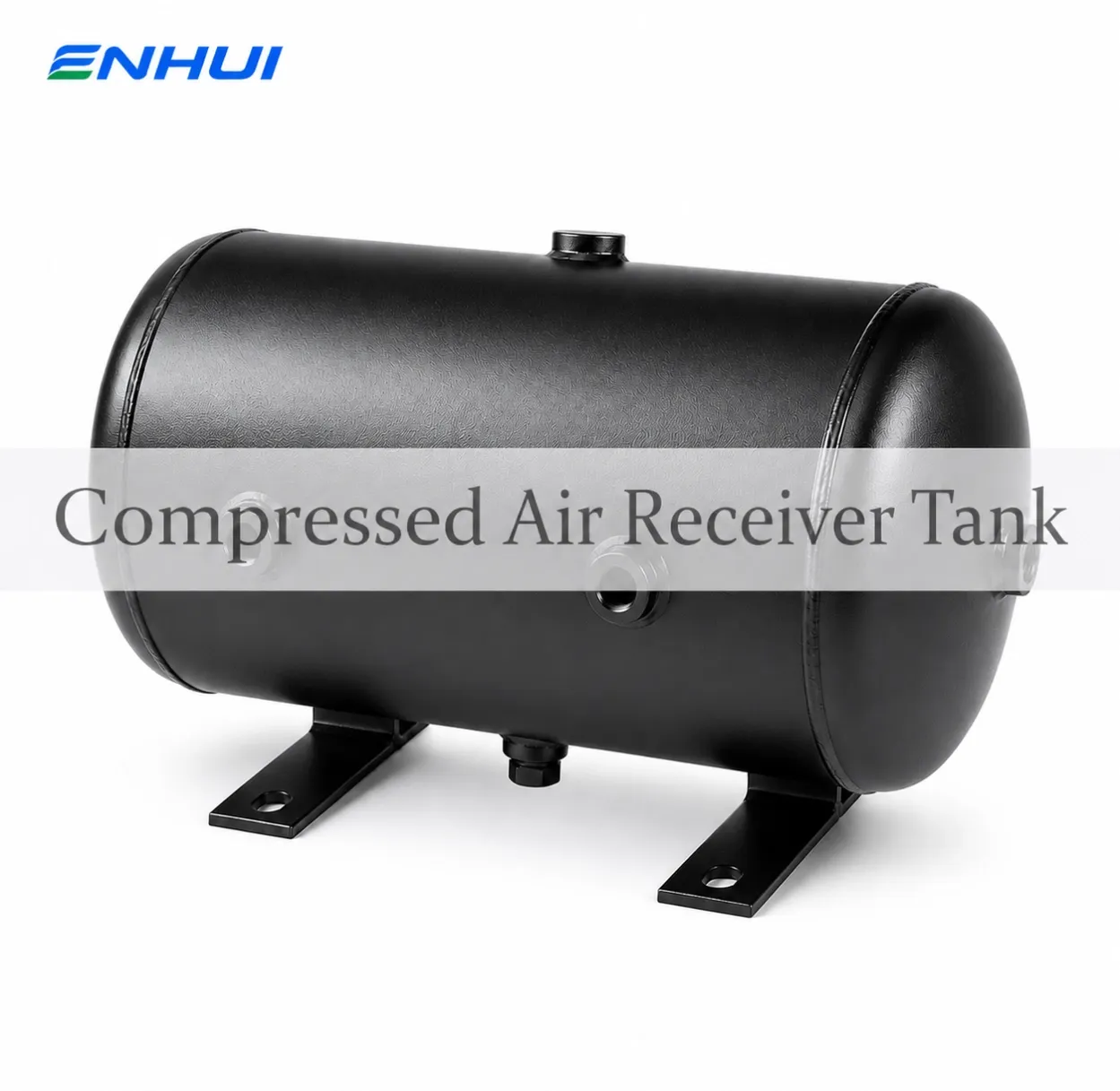
A receiver tank works as a temporary storage unit for compressed air. It helps balance air demand fluctuations, reduce compressor cycling, improve air quality, and provide a more stable compressed air supply.
But how do you choose the right compressed air receiver tank for different applications?
Let's take a closer look.
What Does a Compressed Air Receiver Tank Do?
A compressed air receiver tank mainly performs four important functions:
1. Stores Compressed Air for Peak Demand
Compressed air consumption is not always constant.
For example, pneumatic equipment such as:
- CNC machines
- Pneumatic cylinders
- Solenoid valves
- Air tools
may suddenly require a large amount of compressed air.
The receiver tank provides additional stored air capacity to meet short-term peak demand and prevents pressure drops in the system.
2. Stabilizes Air Pressure and Reduces Pressure Fluctuation
During operation, compressed air demand changes continuously.
Without an air receiver tank, the compressor needs to frequently adjust its operation according to air consumption, causing unstable pressure.
The receiver tank acts as a buffer between the compressor and the air-consuming equipment, helping maintain a more stable pressure range.
Stable pressure is especially important for:
- Automated production lines
- Precision machining equipment
- Pneumatic control systems
3. Helps Cool Compressed Air and Remove Condensate
Compressed air temperature increases during compression.
When compressed air enters the receiver tank, it has time to cool down, allowing part of the moisture to condense and separate from the air.
Therefore, the receiver tank can help:
- Reduce moisture content
- Collect condensate
- Improve compressed air quality
Because condensate accumulates inside the tank, regular drainage is necessary.
A reliable automatic drain valve can help remove collected water and reduce manual maintenance.
4. Improves Compressor Efficiency and Reduces Energy Waste
Frequent compressor start and stop operations increase electrical consumption and mechanical wear.
A receiver tank provides additional air storage capacity, allowing the compressor to operate with fewer loading and unloading cycles.
Benefits include:
- Reduced compressor cycling
- Lower energy consumption
- Longer compressor service life
- More stable operation
Can a Compressed Air System Work Without a Receiver Tank?
Some users may ask:
"Is a receiver tank necessary for a screw air compressor?"
In most industrial compressed air systems, a receiver tank is highly recommended.
Without a receiver tank:
- Pressure fluctuations may increase
- Compressor loading frequency may increase
- Air supply becomes less stable
- Moisture separation becomes less effective
The receiver tank also helps prevent pressure backflow from the pipeline when the compressor stops.
For special systems with very large compressor capacity, large pipeline volume, and stable air consumption, a receiver tank may sometimes be reduced or eliminated.
However, for most factories, CNC machines, and pneumatic equipment, installing a suitable receiver tank provides better system performance.
Benefits of Installing the Right Receiver Tank
1. Protects Compressor Operation
Frequent loading and unloading can increase wear on compressor components.
A properly sized receiver tank helps reduce unnecessary operation cycles and improves system stability.
2. Improves Energy Efficiency
When compressed air demand changes frequently, compressors may run inefficiently.
With a receiver tank, compressed air can be stored during low-demand periods and released during peak demand, reducing wasted energy.
3. Provides Stable Air Supply
A receiver tank works like a storage reservoir.
The compressor produces compressed air, while the receiver tank stores and balances the supply, ensuring pneumatic equipment receives more stable air pressure.
4. Improves Compressed Air Quality
Compressed air entering the receiver tank stays inside for a certain period.
During this time:
- Water droplets can settle
- Some contaminants can separate
- Air temperature can decrease
Combined with proper air treatment equipment, the receiver tank helps improve overall compressed air quality.
How to Choose a Compressed Air Receiver Tank?
Choosing the correct receiver tank depends on several factors.
1. Tank Capacity
A common selection principle is:
Receiver tank capacity = approximately 10%–20% of compressor air output
In many applications, around 15% of compressor capacity is commonly selected.
The required capacity should be increased when:
- Air consumption is high
- Demand fluctuates significantly
- Equipment requires peak airflow
For smaller systems, compact receiver tanks can provide sufficient buffering while saving installation space.
2. Working Pressure
The receiver tank must match the compressed air system pressure.
For example, ENHUI compact receiver tanks feature:
- Working pressure: 0.8 MPa
- Pressure test: 1.2 MPa
- Pressure holding test: 10 minutes without leakage
Reliable pressure testing ensures safe and stable operation.
3. Corrosion Protection
Compressed air contains moisture, and condensate may accumulate inside the receiver tank.
Therefore, corrosion protection is an important consideration.
Compared with tanks that only receive external coating, ENHUI receiver tanks feature:
- External black coating
- Internal anti-corrosion treatment
This provides better protection against internal moisture corrosion and improves service life.
Where Should the Receiver Tank Be Installed?
The installation position depends on system requirements.
Receiver Tank Before Air Dryer
Air Compressor → Receiver Tank → Air Dryer → Equipment
Advantages:
- Helps cool compressed air
- Removes part of condensate
- Reduces load on the dryer
- Suitable for stable air consumption systems
Receiver Tank After Air Dryer
Air Compressor → Air Dryer → Receiver Tank → Equipment
Advantages:
- Provides larger peak demand adjustment capability
- Suitable for systems with large fluctuations in air consumption
Receiver Tank in a Complete Compressed Air System
A complete compressed air system usually includes:
Air Compressor → Receiver Tank → Air Dryer → Filters → Point-of-Use Liquid Separator → Pneumatic Equipment
Each component has a different function:
Component | Function |
|---|---|
Air Compressor | Generates compressed air |
Receiver Tank | Stores air and stabilizes pressure |
Air Dryer | Removes water vapor |
Filters | Removes particles and oil |
Point-of-Use Liquid Separator | Removes residual water, oil droplets and contaminants before equipment |
A receiver tank improves system stability, while a point-of-use liquid separator provides final protection for sensitive pneumatic components.
Conclusion
A compressed air receiver tank is an essential component for improving compressed air system reliability.
By storing compressed air, stabilizing pressure, reducing compressor cycling, and helping remove condensate, a properly selected receiver tank can improve energy efficiency and protect downstream equipment.
ENHUI provides compact compressed air receiver tanks with internal anti-corrosion treatment, designed for CNC machines, automation equipment, and industrial compressed air applications.